Showing posts with label Environmental protection. Show all posts

Saturday, August 10, 2019

Pinoy ecofloor tile inventor

Filipino in Taiwan turns paper cups into 'eco plastic tiles'


Plastic film on surface of paper cups can be put to good use


TAIPEI (Taiwan News) – A Chinese Filipino who lives in Taiwan has come up with a smart solution to the non-recyclable plastic layer in paper boxes and cups – turning it into eco floor tiles.
Eco-plastic tiles inventor Tsai Sheng-lun (蔡昇倫)(right)(CNA photo)
Formerly a successful architect, Tsai Sheng-lun (蔡昇倫) left his high-paying job 11 years ago to work for the NGO Tzu Chi Foundation in eastern Taiwan's Hualien. He has thus shifted his focus from space planning to the invention of eco-friendly products over the past few years, reported the Central News Agency (CNA).

Acknowledging that the outer material coating many disposable paper cups and boxes plastic and hence not recyclable, Tsai has invested effort into making the most use of the waste, which can easily reach 200 tons a day. It was a task commissioned to him by Master Cheng Yen (證嚴法師), a Buddhist leader and founder of the Foundation, Tsai said.

After two years of research and experiments, the effort paid off. Tsai managed to convert the plastic garbage into floor tiles, with each piece measuring 8 by 20 cm. The tiles can be joined together seamlessly, are surprisingly solid and resistant to impact, and can support up to 40 tons.

The eco tiles, which are made with 1.7 kg of plastic trash per piece, were patented on Thursday (Aug. 8). The innovative technology can also be applied to the disposal of candy wraps and other forms of plastic waste, providing an alternative to ceramic tiles while advancing the cause of environmental protection, reported CNA.

Friday, June 7, 2019

Coa-Cola's P1B PH investment

Coca-Cola to invest in P1B recycling facility in Philippines


ABS-CBN News
Jun 07 2019 

MANILA - Coca-Cola Philippines Inc said it would invest in a P1-billion food-grade recycling facility to help boost sustainability efforts in the country. 
The project, which aims to collect, sort, clean and wash PET (polyethylene terephthalate) bottles, is Coca-Cola's first major investment in a recycling facility in Southeast Asia, Coca-Cola Philippines said in a statement. 
"Coca-Cola has called the Philippines its home for 107 years and counting, and we want to do our part in ensuring sustainability within its shores," Coca-Cola Beverages Philippines Inc president and CEO Gareth McGeown said. 
Once completed, it is expected to improve PET collection and recycling rates in the Philippines and generate more jobs, Coca-Cola said.
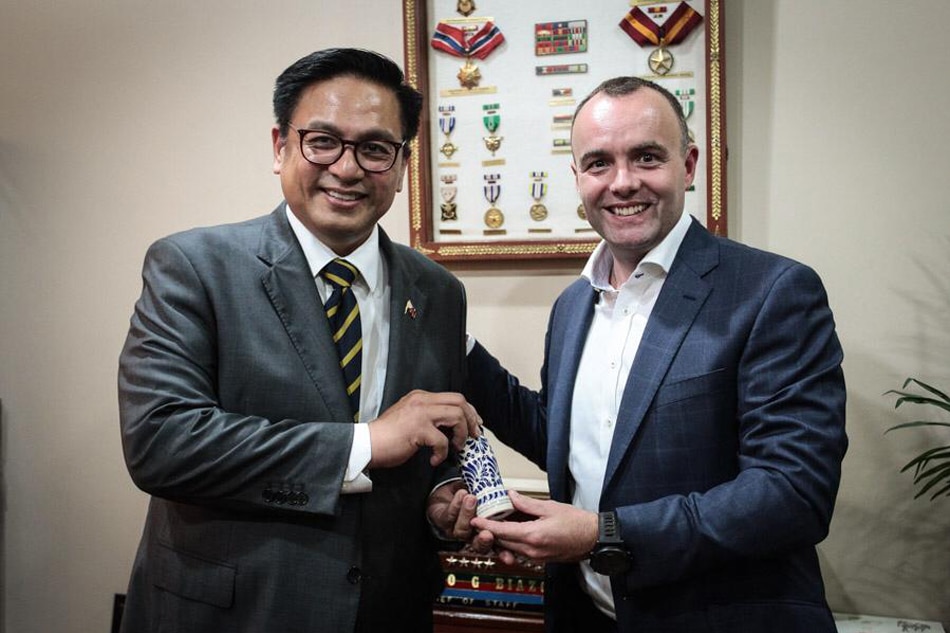
Gareth McGeown, President and CEO of Coca-Cola Beverages Philippines Inc met with Rep. Rozzano Rufino Biazon, principal author of House Bill 7903 also known as An Act Providing For The Phase-Out Of Single-Use Plastic Products, to discuss Coca-Cola’s plans on how to further improve the collection and recycling of PET plastic bottles in the country. Handout

The project is part of the company's "World Without Waste" global commitment, which aims to collect and recycle the equivalent of every bottle and can it sells by 2030, the beverage maker said.
All cans and bottles of Coca-Cola is "100 percent recyclable" and have value as a recycled material, McGeown said. 
Coca-Cola said it plans to use an average of 50 percent recycled content in its packaging, including PET bottles.

Thursday, June 6, 2019

PH biodiversity hotspot

Two new species of 'tweezer-beaked hopping rats' discovered in Philippines


Elusive rodents finally found when scientists switched out peanut butter bait for earthworms


Science Daily.com
06 June 2019


Just about everybody loves peanut butter. We put it on sandwiches and in candy, we use it to trick our dogs into taking their heartworm pills, and, when we have to, we bait mouse traps with it. But, as scientists learned when trapping rodents in the mountains of the Philippines, peanut butter isn't for everyone. A highly distinctive (weird-looking) group of rodents sometimes called "tweezer-beaked hopping rats" don't care for peanut butter, but love earthworms. Armed with this knowledge (and worms), the scientists discovered two new species of the tweezer-beaked hopping rats. The discovery was announced in the Journal of Mammalogy.

"In the late 1980s we were doing standard mammalogy surveys and using standard baits that most rodents really like: a combination of peanut butter and slices of fried coconut. It was really attractive bait, it makes your mouth water," says lead author Eric Rickart, a curator of the Natural History Museum of Utah at the University of Utah. The researchers knew that some of these critters had been found in the area before, but the rats weren't biting. One finally stumbled into a live trap, but it still didn't touch the peanut butter bait. The team tried to figure out what it did eat; when they offered it an earthworm, the rat, in Rickart's words, "slurped it up like a kid eating spaghetti."
"Once we began baiting the traps with live, wriggling earthworms, we discovered that these little animals are common and widespread," says Larry Heaney, a curator at the Field Museum and a co-author of the study. The field team, led by the late Danny Balete of the Field Museum, began finding more species that specialize in eating earthworms, including the two new species described in their recent paper.
The new species are named Rhynchomys labo and Rhynchomys mingan. The genus name, Rhynchomys, comes from the ancient Greek rhyncos for snout and mys for "mouse," a reference to the tweezer-beaked hopping rats' long pointed noses. The species names are for the mountains the rats are found on, Mount Labo and Mount Mingan.
"They're quite bizarre," says Rickart. "They hop around on their sturdy hind legs and large hind feet, almost like little kangaroos. They have long, delicate snouts, and almost no chewing teeth."
"They're very docile, very cute," adds Heaney. "Their fur is short and very, very dense, like a plush toy. They make little runways through the forest and patrol these little trails, day and night, looking for earthworms."
The two new rodents are examples of the generally poorly-known, incredible biodiversity of the Philippines, which boasts more unique species of mammals per square mile than anywhere else on Earth. "Up until the late '90s, we all thought maximum mammalian diversity was in the lowland tropical rainforest" explains Heaney. But Heaney, Rickart, and their colleagues found that mountains like those on the Philippines were the perfect breeding ground for new species of mammals. The different habitats at different elevations on a mountain can lead to different adaptations by its mammal residents, and their diversity actually increases as you go up higher into the mountains. Furthermore, the mammals on one mountain are isolated from their relatives on other mountains. Generations of isolation eventually lead to new species forming on different mountains, the same way that unique species emerge on islands. "Just about every time we've gone to a new area of Luzon with mountains, we've discovered that there are unique species," says Rickart.
But the Philippines' biodiversity is under threat. The islands are among the most extensively deforested places on Earth, with only about 6% of the original old growth tropical forest remaining. That's a big problem for the watershed. High mountains in the Philippines receive between 10 and 20 feet of rain every year, leaving steep slopes vulnerable to typhoons. The mulch-carpeted mossy forests in the mountains help to soak up that rain "like a giant sponge," says Heaney. "If you don't have an intact watershed and forest up in the mountains, you're going to have massive floods and landslides, because the water floods off instead of getting absorbed into mossy ground cover."
The researchers hope that the discovery of the two new species of tweezer-beaked hopping rats will serve as an argument for protecting the mountainous forests where they're found. "Every time we find a reason to say, 'This place is unique,' that tells people that it's worthy of protection," says co-author Phillip Alviola of the University of the Philippines.
All of the work on this project was conducted with permits and strong support of the Philippine Department of Natural Resources. The study was contributed to by authors from the University of Utah/Utah Natural History Museum, the Field Museum, the University of Kansas, the University of the Philippines, and Louisiana State University.

Sunday, October 21, 2018

The Asia River Prize winner 2018


Manila's Pasig River wins International River Prize


Gilbert P. Felongco, Correspondent
Gulfnews.com
21 October 2018


Rehabilitation efforts pay off to bring back to life the once-dying water artery

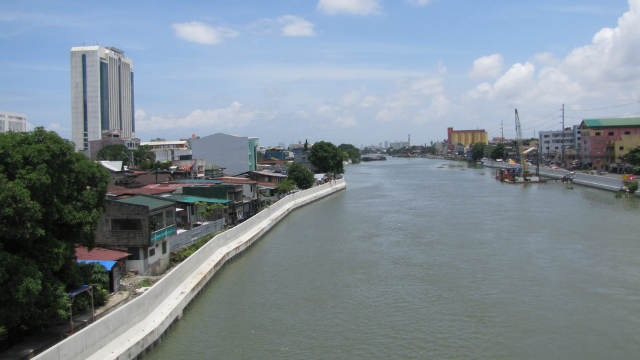
Image result for pasig river
PASIG RIVER. Picture: Spot.ph

Manila: A key river in the Philippines has won the inaugural 2018 Asia Riverprize.
Once the object of criticism for being an eyesore, the Pasig River — Metro Manila and Laguna’s arterial waterway — has redeemed its reputation after years of rehabilitation.

The 27-kilometre-long Pasig River emerged winner over another finalist, China’s Yangtze River.

“The Riverprize is not a competition of which river is more beautiful or cleaner,” the award giving body, the International River Foundation (IRF) said.

Rehabilitation

“This is the reason why the IRF, comprised of river management experts and professionals from around the world, has given importance and consideration to the rehabilitation efforts of the Pasig River Rehabilitation Committee (PRRC) to bring back the Pasig River system to life.”

Name of image

A view of Manila's Pasig River. The International River Foundation (IRF), comprised of river management experts and professionals from around the world, has recognised the job of the Pasig River Rehabilitation Committee (PRRC) to bring back the Pasig River system to life. IRF advocates the “integrated river basin management for the restoration, protection and sustainable management of the world’s rivers". Screengrab

The award was handed over on October 16, at the 21st International River Symposium held in Sydney, Australia.


It was the first time that the prize was given by the IRF.
According to its website, the IRF advocates “integrated river basin management for the restoration, protection and sustainable management of the world’s rivers.”

Name of image
A barge used in cleaning up and dredging silt from Pasig River in Manila.  YouTube Screengrab

“Water is crucial for all life — and we need healthy rivers, lakes and wetlands for sustainable development. We promote and support effective management of these resources by facilitating knowledge sharing, education and best practice river basin management, and by recognising and rewarding those making a difference,” it said.

According to PRRC executive director, Jose Antonio E. Goitia, “the consecutive entries of the Pasig River as a finalist in the 2017 and Thiess International and Asia Riverprize, respectively, is a testament that the world recognises the efforts of the Philippine government to restore the Pasig River and its environs since PRRC was established in 1999.” 

“Initially, the competition was called the Asia-Pacific Riverprize Awards which was opened to entrants from New Zealand, Australia, and 45 other countries.

"However, according to the IRF, due the to the high number and quality of entries received, they have made the decision to split the promoted Asia-Pacific Riverprize into two: Asia Riverprize and another category for the Australasia Riverprize,” Goitia said in a blog.

Due to the efforts of the present and past administrations, the once-dying Pasig River had sprung back to life and offers hope that it will regain the splendour it once had when it was the subject of prose and poetry from old times.

“Compared to the 1990s when it was declared ‘biologically dead,’ the Pasig River’s condition now has significantly improved. Although the Pasig River development is a work in progress, many areas along the historic river have already shown signs of aquatic life and it has already become conducive for transport, recreation, and tourism,” Goitia said.

Name of imageVisitors check out the Pasig River. Thanks to the efforts of the present and past administrations, the once-dying Pasig River had sprung back to life and offers hope that it will regain the splendour it once had when it was the subject of prose and poetry from old times. Screengrab

The IRF, for its part, said: “Critical to the success of the story was bringing the community, around 18,000 people, to decent housing and transforming these communities and their lives into environmentally responsible citizens.”

Aside from global recognition, the winner of the 2018 Asia Riverprize can build new partnerships, provide opportunities for exchange of knowledge and best practices, and open doors for international support.

The winner will automatically qualify for Stage Two of the Thiess International Riverprize in 2019.

Pinoy farmer finalist in International Cocoa Awards

Filipino farmer makes it to the finals of 2019 International Cocoa Awards Antonio Colina Manila Bulletin 18 August 2019 DAVAO CITY ...