Showing posts with label France. Show all posts

Sunday, August 18, 2019

Pinoy farmer finalist in International Cocoa Awards

Filipino farmer makes it to the finals of 2019 International Cocoa Awards


Antonio Colina
Manila Bulletin
18 August 2019


DAVAO CITY – Jose Saguban, a farmer from Kialaw, Malabog in Paquibato District, Davao City, will compete with 49 other farmers from all over the world for the prestigious 2019 International Cocoa Awards (ICA) during the Salon Du Chocolat in Paris, France on October 30 after his beans were selected as one of the top 50 cocoa beans out of the 223 samples from 55 countries.

(Photo from DAR Region XI)

Saguban’s entry was the only one to make the cut out of the five bean samples from the Philippines. The farmer supplies beans to Auro Chocolate, maker of fine dark chocolates.
Auro Chocolate said it has been helping Saguban and other members of the Paquibato Tree Developers Cooperative with new farm techniques to achieve better quality, mentoring them on the fermentation protocols. The company prepared and sponsored Saguban to join the competition.
“We’d like to thank all of our farming partners for working tirelessly to improve the quality, and not just put the Philippines on the map for cacao beans but for showing the world that we can make gold,” the company said.
Cacao Industry Development Association of Mindanao (CIDAMI) executive director Valente Turtur said five samples — two from Compostela Valley, two from Calinan District, and one from Paquibato District — were sent to Paris at six kilos per entry last February.
All the bean samples were subjected to physical quality and sensory evaluation from February until June, and flavor sensory evaluation of coca liquor by the Cocoa of Excellence (CoEx) technical committee from July to August.
The entries from the Philippines were all winners of the Philippine National Cacao Industry Council’s National Cacao Award System, which was established to select the best cacao beans that will represent the country in the international competition, Turtur said.
According to CoEx, the ICA, a global competition recognizing the work of cocoa farmers and celebrating the diversity of cocoa flavors, and spearheaded by Bioversity International and Event International, recognizes “quality, flavor, and diversity of cocoas according to their origin.”
The best 50 samples, which will be processed into chocolate, will undergo another stage of flavor sensory evaluation by the CoEx technical committee and a broader panel of professionals. Out of 50 finalists, the CoEx will select 15 to 20 winners.
The winners, including the finalists, will be showcased at the Salon Du Chocolat, which will gather 500 participants from 60 countries, including over 200 renowned chefs and pastry chefs.
Data from the Philippine Statistics Authority (PSA) showed the country’s cocoa beans production level reached only 7,983 MT in 2018, 81% of which came from the Davao region.
From 2008 to 2018, the production only grew by 2,834 MT or 55.04% of the Philippines’ cacao production which is insignificant compared to one million MT a year from Ivory Coast, 800,000 MT from Ghana, and 400,000 MT from Indonesia, Turtur said.

Saturday, March 16, 2019

The Philippine flag is raised in this famed Paris museum—all because of our anting-antings


The playwright and curator Floy Quintos has exposed part of our secret soul in the City of Light. At the Musée du Quai Branly along the banks of the Seine, the exposition he put together explores the story of our amulets and the complex, hybrid nature of the Filipino faith .

Renee Ultado | Mar 16 2019 
ABS-CBN News


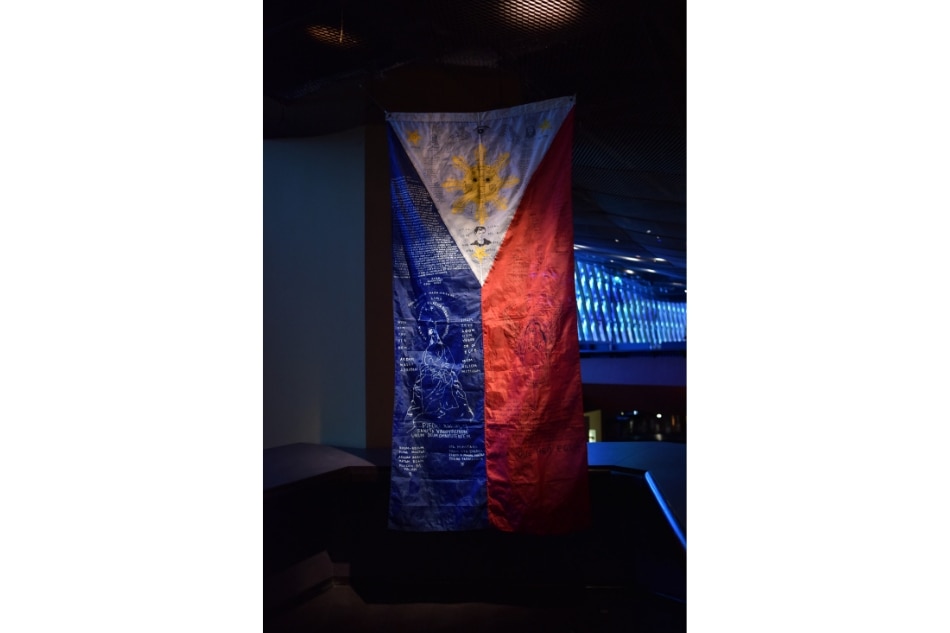
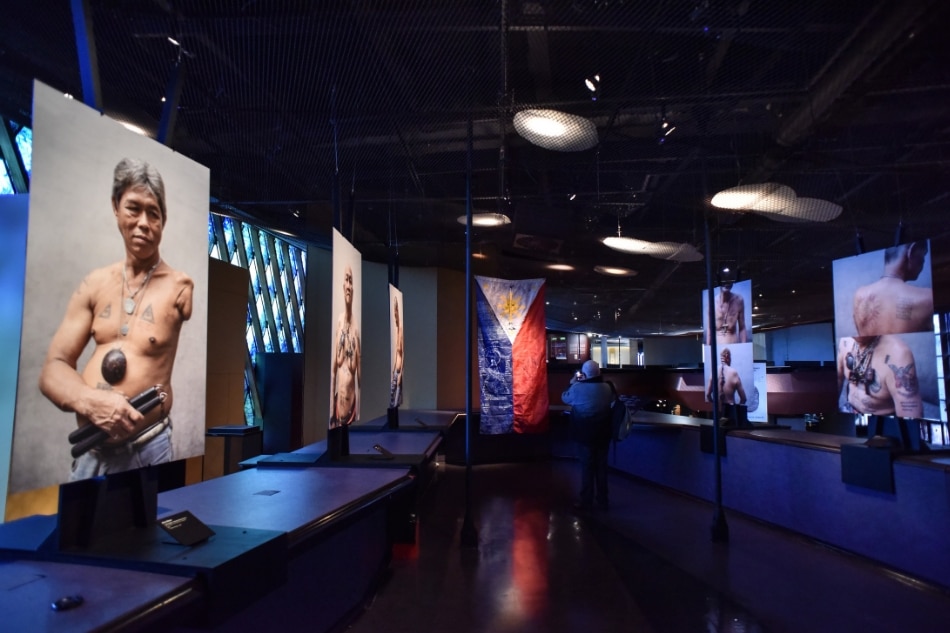
The Philippine Flag stenciled with sacred symbols and incantations, flanked by Dino Dimar photographs of current cult members wearing their anting-antings.

It was a windy Monday morning when the Musee du Quai Branly opened its doors to the press, collaborators, friends, and select patrons for the opening of two exhibitions for Spring. The buzzy Oceania assembles almost 200 archaeological objects and art pieces representative of the Pacific island cultures, while Anting-Anting—to which I was invitedis a more intimate installation telling the story of the historical and contemporary use of protective amulets, talismans, and charms in the Philippines.

“This feels like coming home,” I said, soliciting a genuine noddy smile from the docent as she ushered me into the exhibit space, an obscure area floating above the museum’s permanent collection. It was a half-lie. While the Santo Niño, the Nazareno handkerchiefs, and the odd bits of brass jewelry looked familiar, the whole ensemble felt very foreign to me. Eerie and ominous almost. A physical manifestation of things I have only heard of before.

The exposition entitled Anting-Anting: The Secret Soul of Filipinos explores and demystifies these “charged objects” utilized by a myriad of Filipinos to this very day, from policemen to cult members. An offshoot from a previous exhibit at the Yuchengco Museum in Manila, the collection was built and curated by playwright, director, and antique dealer Floy Quintos.

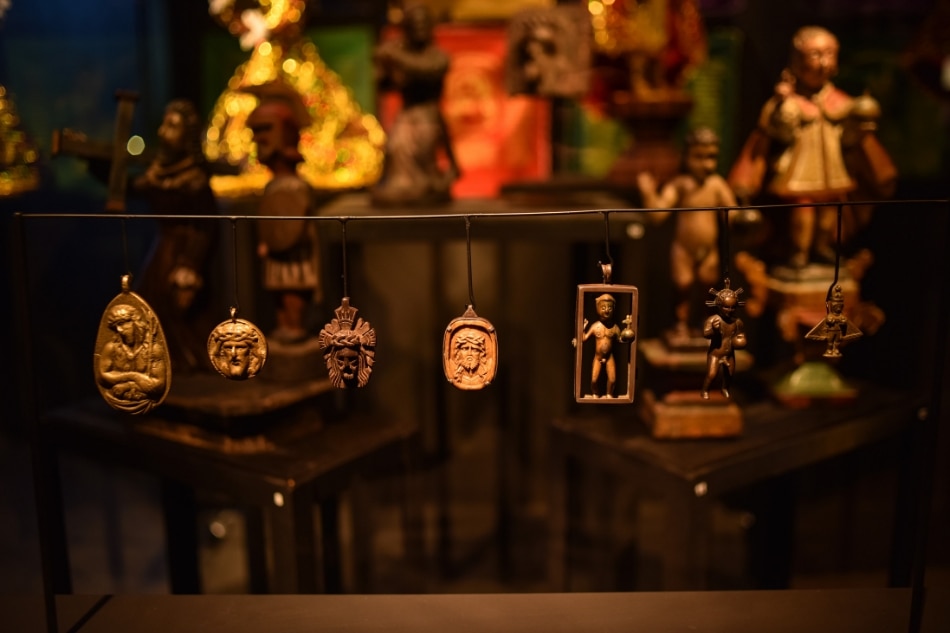
Images of Jesus Christ and the Santo Niño figure into these ancient amulets in brass and ivory, highlighting the Catholic influence on the animist nature of the anting-anting.

The invitation to show here in Paris came with challenges, mostly reworking the storytelling for a predominantly European audience. “My French colleagues would ask me, okay, how do the objects talk to me? How do we make them engage?” Quintos shares. He had to make the exhibit relatable and transportative even to people who have never been to our islands.

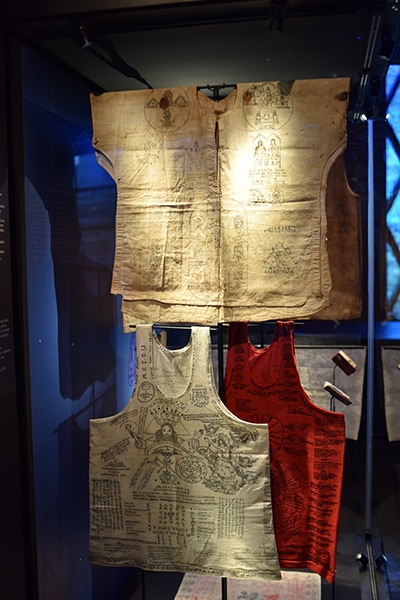
And transportative it was. Utilizing the Atelier Martine Aublet, a space designed to be a “contemporary cabinet of curiosities,” Quintos repackaged the exhibit into smaller pockets of stories. One corner shows Rizalista cult paraphernalia, another reveals blood-stained linen vests with pearl buttons believed to bestow protection against bullets.


In 1967, socio-political cult Lapiang Malaya marched into Malacañang, equipped only with bolos, anting-anting, and these stenciled shirts believed to make the wearer invincible against bullets.

On the other side, a wall glows with images from a Dino Dimar documentary following the journey of pilgrims to Mount Banahaw. The space is then infused with noises both familiar (the hypnotizing sound of a waterfall hitting the plunge, a solemn rendition of Ama Namin) and unfamiliar (orations in Pig Latin murmured from sacred booklets). One is given the impression of being in the caverns with the faithful as they pray, light candles, slither into crevices, and collect blessed water.

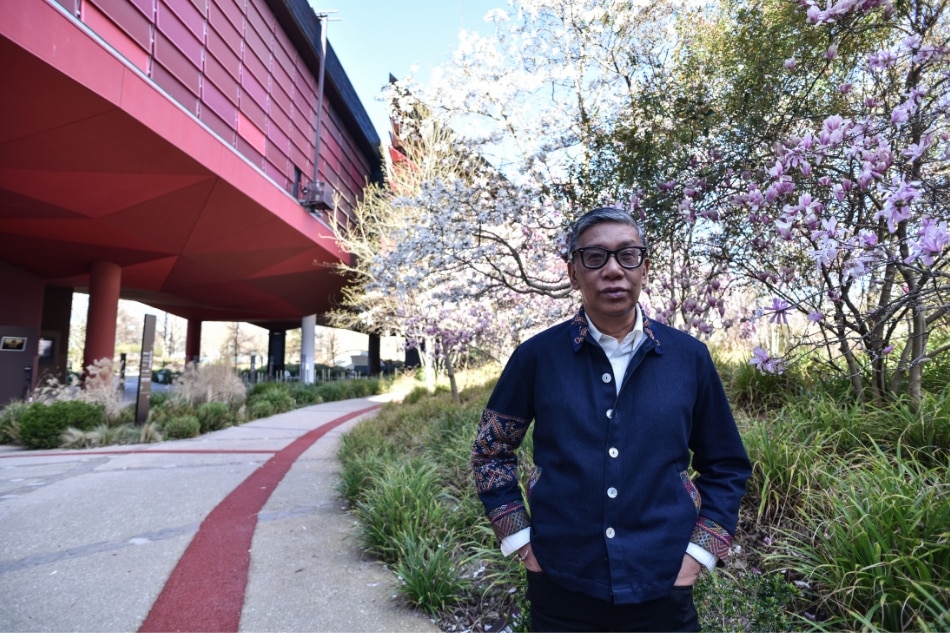
Quintos photographed outside the Musée du Quai Branly in Paris. “My French colleagues would ask me, Okay, how do the objects talk to me? How do we make them engage?” Photographs by Claudio Fleitas.
Some bearing iconographies from the Catholic religion, the anting-anting is one of the many portraits of Hispano-Filipino postcolonial hybridity. Did the Spanish try to make their Gospel more relatable, and the process of evangelization smoother, by incorporating bits and pieces from the native religion? Or did the Filipinos feign allegiance to the Catholic faith while discreetly continuing their animistic ritual under the nose of the colonizer? “That’s the question. It was the kind of dialogue we wanted to highlight,” says Quintos.

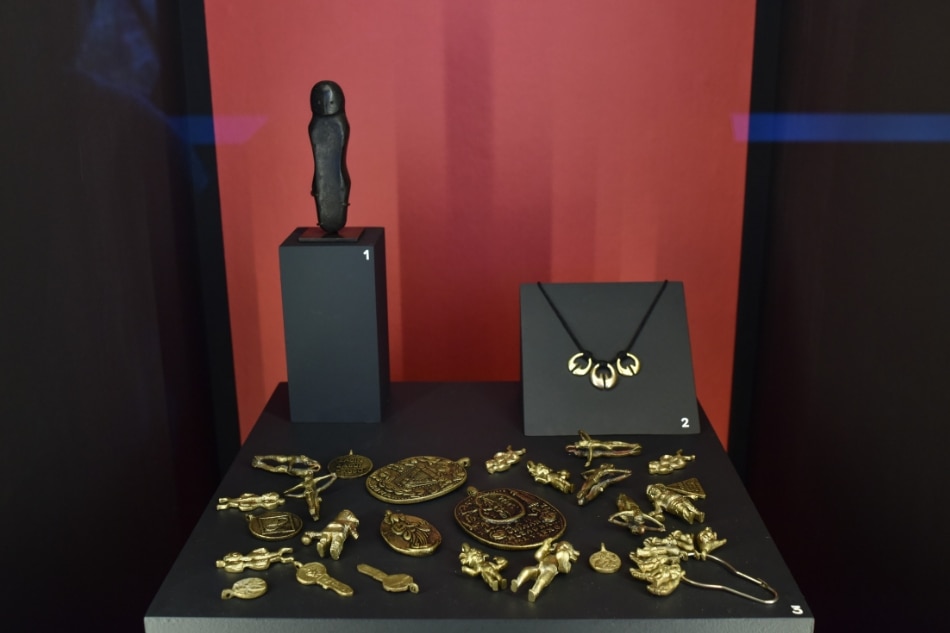
The hi'wong is an Ifugao shaman's amulet functioning as a portable idol (1) while the Lingolingo, also from the Ifugao, is a golden pendant worn to ensure good health, fertility, safety, and bounty. Towering over a collection of commercially-produced amulets (3), it shows the potent pre-colonial origins of the anting-anting and its still-widespread use in contemporary society.
A special nook stripped of protective glass is transformed into a tienda of modern anting-anting, open for people to look closely and even touch. Here, they are less spiritual and somehow devoid of a deeper meaning. Quintos wanted to show how they are today more recognized as popular charms, tailored to augment the spirit or help fix daily woes. It is truly revelatory of the multiple ways we practice our faith in the present. I think of my mother, probably the most Catholic person I know, who keeps her Vatican rosaries next to a Buddha sculpture, or my peers who hear mass on Sundays but wander around with a rose quartz crystal in their coat pocket the rest of the week.
The Philippine flag stenciled with sacred symbols and incantation

The show ends in a juxtaposition of cheap, commercially-made trinkets stacked in a pile under an ancient portable idol carved from stone by the Ifugaos. It shows that the need to always carry a tangible piece of the divine, be it for protection or for luck, is universal and distinctly Filipino. It transcends class, languages, and cultures, and reminds us that everyone, from lovestruck tweens to jittery dispatched soldiers, could use a little help from beyond.

Photographs by Claudio Fleitas
The exhibit Anting-Anting : L'Âme secrète des Philippins runs from March 12 to May 26, 2019 at the Musée du Quai Branly - Jacques Chirac 37 Quai Branly, 75007 Paris, France

Tuesday, December 11, 2018

PH to become 18th largest economy by 2037

Philippines to become 18th largest economy by 2037 — report

Philippine Star | 11 December 2018

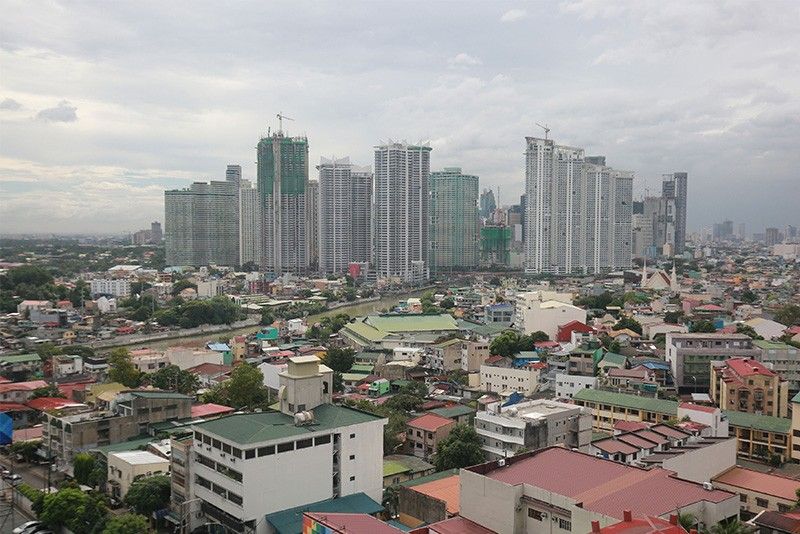
This Nov. 9, 2018 file photo shows the Mandaluyong-Makati skyline. The Philippines is set to become the 18th largest economy in the world over the next twenty years, Capital Economics reported, citing the Southeast Asian nation’s young workforce.
The STAR/Michael Varcas

MANILA, Philippines — The Philippines is expected to become the 18th largest economy in the world over the next twenty years, Capital Economics reported, citing the Southeast Asian nation’s young workforce.

In its “Long-Term Global Economic Outlook” report released last week, the London-based economic research consultancy forecasts the Philippines’ nominal gross domestic product to hit $1.414 trillion by 2037.

Thirty economies were tracked in the report. In 2017, the Philippines was ranked 25th in terms of nominal GDP.

According to Capital Economics, the Philippine economy will likely outgrow Turkey, Poland, Thailand, UAE, Egypt, Colombia, South Africa, Argentina, Czech Republic, Angola, Morocco and Kenya two decades from now.

By 2037, Capital Economics sees the US dominating the top 17 economies based on nominal GDP, followed by China, India, Japan, Germany, the UK, France, Mexico, South Korea, Brazil, Canada, Australia, Italy, Indonesia, Russia, Nigeria and Saudi Arabia, respectively.

“Growth in Emerging Asia is likely to slow over the coming decades due to a combination of less favourable demographics and reduced scope for catch-up,” the consultancy said.

“Meanwhile, working age populations will still grow at a fairly rapid pace in countries such as the Philippines, Malaysia and India,” it added.

The Philippines had enjoyed uninterrupted growth in the past quarters, thanks to benign inflation in the previous years that had given the central bank enough room to keep interest rates low.

In the same report, Capital Economics flagged weakening investor appetite in the Philippines due to President Rodrigo Duterte’s leadership style.

“There are signs that the election of President Duterte in the Philippines is scaring off foreign investors and the situation is unlikely to improve when he is gone,” it said.

“The country has a poor history when it comes to electing competent governments,” it added. — Ian Nicolas Cigaral

Pinoy farmer finalist in International Cocoa Awards

Filipino farmer makes it to the finals of 2019 International Cocoa Awards Antonio Colina Manila Bulletin 18 August 2019 DAVAO CITY ...