Showing posts with label Manila. Show all posts

Thursday, August 8, 2019

US, Singapore to support Manila

Manila bags US, Singapore support to turn capital into 'smart city'

Katrina Domingo
ABS-CBN News
08 August 2019

MANILA - The United States and Singapore sent envoys to Manila City Hall this week to offer their assistance in the capital’s modernization and development programs.

Singapore committed to share its technical expertise in traffic and sewage management, and digital governance with Manila, Singaporean Ambassador to the Philippines Gerard Ho told reporters after his courtesy call on Mayor Isko Moreno, Thursday.

Singaporean Ambassador to the Philippines Gerard Ho arrives at the Manila City Hall to pay a courtesy call on Mayor Francisco “Isko Moreno” Domagoso on Thursday, August 8, 2019. (Manila PIO photo / MANILA BULLETIN)
Ho, who met with Moreno on the eve of Singapore’s 54th National Day, offered to fund a “study trip” to the city state where the Manila mayor could learn more about first-world policies and practices.

“We are ready to share. Ask us if you need any help. We have areas of expertise in traffic management, sewages, but you have to see what works for you because you cannot blindly apply,” Ho, the envoy of Southeast Asia’s richest nation, told Moreno during the meeting.

A similar offer was given to Jakarta before, he said.

"If you have done something before and it seems to work, and you want to be a good neighbor and friend to your region, isn’t it good to share these things to everyone?" he said.

US TO HELP DESIGN MANILA’S SMART CITY PLAN
Singapore’s commitment comes a day after officials from the US Embassy visited Moreno and offered to help the capital’s flood monitoring and prevention program.

"I was asked what I wanted to prioritize. Sabi ko, ‘Once and for all, please, study Manila geographically with regard to flooding problems," Moreno told reporters.

"So that once and for all, magkaroon ng drainage plans, catch basins and everything that will address the problem," he said.

US officials also backed Manila’s efforts to turn the capital into a “smart city,” Moreno’s chief of staff Cesar Chavez told ABS-CBN News.

“We were given options by the US Embassy Commercial Section if we want a total design for a smart city or a piece of it,” Moreno’s chief of staff Cesar Chavez told ABS-CBN News.

“Our inclination is to request for a total design... traffic, solid waste management, flooding, social services,” he said.

The city is also looking into a Manila Residents ID system, he said.

The design is expected to be completed in 4-6 months, while its approval would take an additional 3 months so implementation might happen next year, he said.

PRIVATE SECTOR OFFERS

Business tycoon and PLDT-Smart CEO Manuel V. Pangilinan earlier said his telecommunications company would provide closed-circuit television cameras for “all parts” of capital city.

PLDT-Smart would also help with the creation of Manila’s “operations center” on the city hall’s 4th level, he said.

Pangilinan also committed to fund the construction of a fountain near the city hall, Moreno said.

Wednesday, July 31, 2019

PH new Manila international airport

Philippines approves plan to build new Manila airport


Gulf News| 31 July 2019

Philippine conglomerate San Miguel will build the airport in Bulacan town
airport generic

Highlights


  • San Miguel Corp was the only company to bid for the project
  • Company will have to break ground on the $14 billion project before the end of the year
  • It is set to open for business no later than 2025 

MANILA: The Philippines on Wednesday approved a plan to build a new airport near Manila, in a bid to ease congestion with the capital's existing airport operating at full capacity.

Philippine conglomerate San Miguel will build the airport in Bulakan town, north of Manila Bay, that will feature four parallel runways and serve 100-200 million passengers a year, a government statement said.
"This new international airport is important in helping ease the congestion of the Ninoy Aquino International Airport (in Manila)," Transportation Secretary Arthur Tugade said in the statement.

San Miguel, which was the only company to bid for the project, will have to break ground on the $14 billion project before the end of the year and open for business no later than 2025, the statement said.


The company has said it plans to run the airport — which would be the biggest infrastructure project under President Rodrigo Duterte's government, after obtaining a government concession.

The existing Manila airport, which has two runways, handled nearly 260,000 flights and served 45 million passengers last year, according to its website.

The announcement came after the close of trade in Manila. Shares in San Miguel rose 1.19 percent to end at 178.00 pesos ($3.50).

Monday, June 10, 2019

PH, a Jewish home

How Jews secretly found a home in the Philippines 

CNN Philippines
10 June 2019


Manila (CNN Philippines Life) — Enamored by the worlds of kings and prophets rooted in the Hebrew Bible, Yehudah*, 28, was curious about the Jewish faith ever since he was a child. He grew even more intrigued when he learned that the Israel of the ancient world is still alive today, right there at the center of the world map — proof, to him, that the God those old prophets proclaimed stayed faithful to His promises. He wanted to know this God. He wanted to be close to Him, just as the Israelites were.

The Jewish synagogue in the Philippines is a melting pot of Israelis, North Americans, and Filipinos, a close-knit community of Jews that gather in a simple, serene hall. Pictured above is an authentic Torah scroll that can be found in the synagogue. Photo by JL JAVIER

But for a young Filipino born into a Christian family in a predominantly Catholic country, learning the faith on his own was not easy.

He did not have the money or a passport to fly to Israel. He could not find all the rules and prayers to follow, despite spending hours reading about Judaism in local bookstores and on the then scant sources of the Internet. He felt becoming a Jew was close to impossible.

A frustrated teenager, Yehudah told God, “If You won't let me come closer, then I will run my life my own way.”

And so he did. In college, he stopped praying, save for the few times he was desperate for help or angry with God. When he joined the workforce, he poured himself into a demanding job at a local NGO, hoping that this identity as a young, secular professional working hard to serve his country would give his life meaning. But, alas, he found himself still yearning for purpose.

By the time he turned 26, it was time for Yehudah to accept what he had long known. He was called to be a Jew.


Inside the Beit Yaacov Synagogue, the only synagogue in the Philippines located at Salcedo Village in Makati City. Photo by JL JAVIER

A Filipino story

On Nov. 9 and 10, 1938, Nazi mobs destroyed hundreds of synagogues, attacked thousands of Jewish-owned stores, and arrested roughly 30,000 Jews in Germany. This was the Kristallnacht, also known as the Night of the Broken Glass — alluding to the shards of glass windows that littered the streets of Germany in its aftermath.

Less than two weeks later, 2,000 Filipinos filled the fields of the Ateneo de Manila campus in Intramuros, protesting against the violence of Kristallnacht. Though a small Jewish community had been living in Manila at the time, Jews did not spearhead this protest. It was led by Senator Quintin Paredes and supported by Catholic and Protestant leaders and local civic groups.

“How they did it, why they did it, how they knew, why they even cared was an amazing thing,” says Lee Blumenthal, executive director of the Jewish Association of the Philippines.

When anti-Semitic policies began to intensify in Europe and many countries refused the entry of Jews in the 1930s, the Philippine government, together with the American High Commissioner Paul McNutt and members of Manila’s Jewish community, such as cigar manufacturers the Frieder brothers, devised a careful plan to save as many Jews as they could. Working around difficult U.S. immigration laws at a time when the Philippines was still a U.S. colony, the group found a way to take in Jewish professionals — doctors, engineers, accountants — who would appear to benefit the Philippine economy.

According to Blumenthal, while other countries had taken in Jews of their own nationalities, the Philippines was “the only country in the world that went out to save Jews that were not their own.”

Yet, eight decades since Manuel Quezon opened the doors of the Philippines to 1,300 Jewish refugees escaping the Holocaust in Europe, many Filipinos are only learning about the radical story binding Jews and Filipinos today. This is in part caused by brave efforts in recent history to tell this story. From the book “Escape to Manila” (2003), written by Jewish refugee Frank Ephraim, to the recently released award-winning movie “Quezon’s Game,” helmed by the British-Jewish director Matthew Rosen, much of these stories have been told by Jews themselves.

While Filipinos may tend to forget, Jews do not. Jews remember, and they are proud to tell us that this is our story to claim.

“This is a Philippine story, this is not a Jewish story. Filipinos did this,” says Blumenthal. “And we want to give back.”

Two days after Typhoon Yolanda hit the Philippines in 2013 and devastated thousands of lives and homes, Blumenthal received an urgent phone call from a man named Danny Pins, who was calling from Israel. He said he was with the American Jewish Joint Distribution Committee, and he wanted to help. He wanted to come to the Philippines and bring in a 150-person medical team and supplies of typhoon relief. He said this was very important to him: his own mother was one of those who found a home in the Philippines when the rest of the world closed its doors.

Painted on the ceiling of the synagogue are the Twelve Tribes of Israel and the Seven Gates to Jerusalem. Photo by JL JAVIER

Finding freedom in Jewish spirituality

It took Yehudah almost two years until he finally became a full-fledged Jew.

Soon after he made that choice to dive in, he contacted the rabbi leading the only synagogue in the country, entered their house of worship as a non-Jew, and after two interviews, joined a class on the basics of Judaism for conversion candidates.

Spending that time studying the rules and prayers he longed to learn as a child, Yehudah found freedom in the path paved by the Torah, also known as the Five Books of Moses, or the Jewish law — a law that shaped world civilization through both Christianity and Islam. Jews are also encouraged to question these laws.

Yehudah says that the Talmud, the text describing the Jewish law, is filled with arguments among rabbis on how to apply Judaism to daily life. They are taught to think, to question why God wants things done a certain way.

“Engaging in the same process with my conversion classmates and our rabbi, I found that the Torah's rules were not instituted haphazardly — you can see traces of love, compassion, and logic.”

Yehudah fell in love with the law along with the rituals, which he describes as simple yet profound.

Before and after partaking of any food, for instance, Jews recite short prayers. Yehudah says that these prayers help him remember that everything continues to exist only because of Hashem, and that even something as mundane as drinking water is considered a part of your life’s mission.

“And that,” he adds, “you should always be grateful to anyone for whatever help they give you.”

Yehudah says that the Talmud, the text describing the Jewish law, is filled with arguments among rabbis on how to apply Judaism to daily life. They are taught to think, to question why God wants things done a certain way. Photo by JL JAVIER

A home within a home

Just as their religion teaches, Jews who live in the Philippines today remain eternally grateful.

“In my 30 years living in this country, I have never faced anti-Semitism,” Blumenthal says with conviction and pride. “That is a wonderful thing. We feel accepted, and part of the country.”

When he began to transition into following the laws that govern the daily life of a Jew, Yehudah echoes a similar reception from his fellow Filipinos.

He recalls how his boss let him skip work on Saturdays so that he can practice keeping the Shabbat, the Jewish holy day of rest. His parents have long accepted that he will no longer be going back to church, and even help him prepare kosher food — food he is fit to eat based on Jewish law.

“When I walk through the streets of Makati wearing my kippah, a head covering symbolizing my submission to Hashem's will, people don't point and stare — unlike in Europe, where wearing a kippah might be dangerous.”

And just as Filipinos welcomed Jews with open arms, so did the Jews welcome Yehudah with warmth. A melting pot of Israelis, North Americans, and Filipinos, the close-knit community of Jews that gather in a simple, serene synagogue at the heart of Makati City never made Yehudah and his fellow converts feel like an outsider.

“I found that many people wanted to talk to me, maybe inspired by someone choosing the faith that they were born into.”

Today, Yehudah no longer feels conflicted between these two worlds. Instead, he considers himself lucky to be an ambassador of both. When he is with Israeli or American Jews, he does his best to represent the Filipino as helpful, respectful, and hard working. Recognizing that he may be the only Jew that many Filipinos would ever encounter, he hopes to leave the impression of someone who is trustworthy and ethically responsible, of someone who loves to learn.

“My heart may have been formed by Hashem in Jerusalem, the center of the world, but the blood that runs through it is from Manila.”

Yehudah may have felt alone as a child, but now he proudly embraces his unique identity. He is a Jew. He is a Filipino. He says he is a private man, but he has a story to tell — one that began many years before he was born; one that did not discriminate against religion or race; one that is profoundly, radically human.

Living proof that the story between Filipinos and Jews remains unfinished, Yehudah is happy to speak for his people today.

He says, in a sense, he did not convert. He only went home.

*Name has been changed upon the request of the interviewee. Yehudah, the son of Jacob and Leah, means “to thank” in Hebrew.





Friday, March 29, 2019

Miss Universe 2015 waxed

Pia Wurtzbach in wax unveiled 


Nathalie tomada
The Philippine Star
29 March 2019


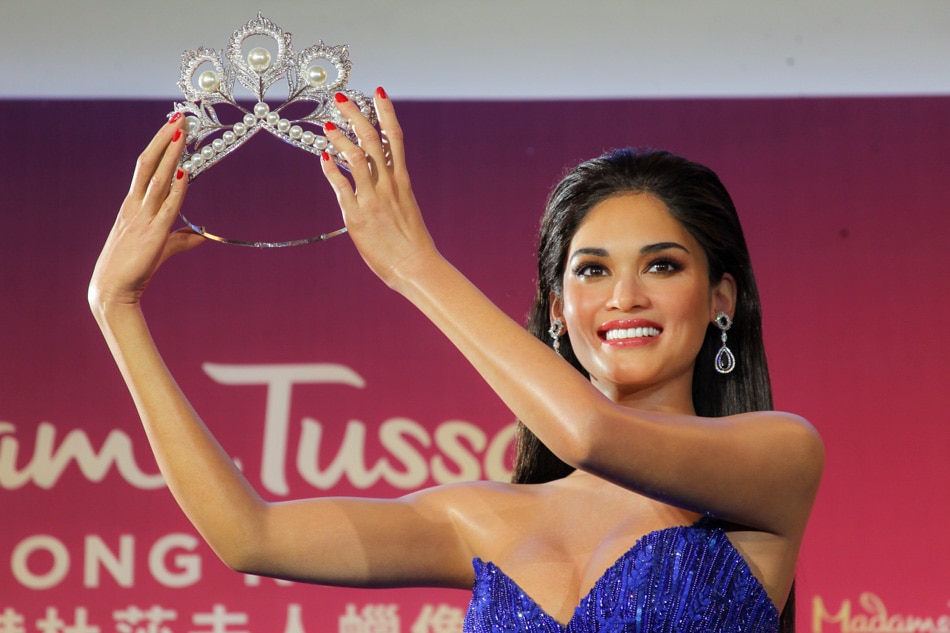
MANILA, Philippines — Former Miss Universe Pia Wurtzbach felt like a winner again as she unveiled in Manila yesterday her wax figure for Madame Tussauds Hong Kong.


Miss Universe 2015 Pia Wurtzbach poses under the crown held by her Madame Tussauds wax replica, which was unveiled to the media during an event at the EDSA Shangri-La yesterday.Jesse Bustos


Wurtzbach is the first and only Filipino celebrity to have a figure at the popular wax museum chain’s flagship attraction in Asia.

“It’s so surreal. I cannot explain how happy I am now. I feel like I won again,” the 29-year-old beauty queen and actress told The STAR.


Wurtzbach said she used to go to Madame Tussauds and even had a throwback photo from 10 years ago when she went to the wax museum in Las Vegas, USA.

“So I know how fun it is there, how fun it is to take photos with the celebrities in wax figures. Never in my wildest dreams did I think I’m gonna be immortalized,” Wurtzbach said.


“I’m going to look young forever,” she quipped.

When asked how she was selected, Wurtzbach said she was informed that a survey was undertaken on Filipino celebrities.

“That’s what they told me. They did like a survey, a study, and that’s how they decided to select me.”

According to Madame Tussauds Hong Kong general manager Jenny You, they decided to have a Filipino wax figure due to the request of their Filipino visitors.

 “Our Filipino guests have always been important to us and we’ve always believed we should have a Filipino wax figure, so we’re very pleased to have Pia mark this milestone with us. We can’t imagine having anyone but her to represent the Philippines in this way.”

She added, “More than being a queen, (Wurtzbach) has all the makings of an icon and we’re proud to be able to house her wax figure at Madame Tussauds Hong Kong for the rest of the world to be able to interact with.”

At the big reveal held at the Edsa Shangri-La Hotel, it was like seeing double for the media as Wurtzbach came face to face for the first time with her wax version.

It wore the same stunning Swarovski-embellished royal blue ball gown by Michael Cinco, which she donned when she passed the Miss Universe crown in 2016.

People will enjoy their own crowning moment with Wurtzbach’s wax version. “I really love it. I really love the pose. It’s very interactive. People are going to be able to touch it.”

To come up with such a flawless resemblance, the process of getting her measurements took four to five hours. The making of the figure took six months, with 20 artists working on it in London where Madame Tussauds originated.

“I had to do the pose for quite sometime because they had to measure everything, like the distance from my wrist to my elbow, everything. They had to measure manually,” she said.

They also took a lot of pictures of her face, from different angles, but Wurtzbach said, “I never got tired because I was too excited, my adrenalin was up.”

She continued, “They really paid attention to detail. They checked the color of my hair because iba pala ang color natin dito sa harap, sa likod, sa ilalim, the hair has highlights and lowlights and then I had to step outside into the natural light so they could get the exact color of my eyes. And fun fact, the teeth (are) exactly the same because they got my dental impression from my dentist.”

The Miss Universe crown used in the wax figure is the Mikimoto crown as approved by the Miss Universe Organization.

Her wax version is home for the #PiaMadeIconic Travel Festival today at SM Mega Fashion Hall.

The festival is a joint effort of Madame Tussauds Hong Kong with two other major travel brands, international airline Cathay Pacific and booking platform Klook.

Special packages are being offered at the event for first time and frequent travelers to Hong Kong.

After the travel fest, Wurtzbach’s wax figure will be flown to its permanent home at Madame Tussauds Hong Kong, where it will join life-size replicas of some of the world’s most famous celebrities and historic icons in themed galleries.

Thursday, March 21, 2019

Manila's New Norwegian Training Center

Norwegian To Open New Crew Training Facility in the Philippines 


Cruise Industry News
21 March 2019


Norwegian Cruise Line Holdings (NCLH) today announced plans for the development and construction of the Norwegian Cruise Line Center of Excellence, a new shipboard seafarer training facility near Manila in the Philippines. 
NCLH Training Facility RenderingNCLH said that the 200,000-square-foot facility will serve both new and existing shipboard team members across the company and will provide training for various onboard service areas. The training campus will enable the company to fully immerse trainees in their coursework, reduce onboard training time and further improve upon service levels. 
The facilities have been designed to provide trainees with realistic work and living experiences aboard a cruise ship, which will include replicas of staterooms, galley, casino floor, full service bar as well as safety and security training areas. Slated for 2020 completion, the center will provide annual training for as many as 8,000 shipboard team members each year. 
“As the company continues to grow and execute on our disciplined newbuild pipeline with eleven ships on order through 2027, the Center of Excellence will enable us to train and develop shipboard staff to meet the growing demand for top talent and to provide our guests with the high level of service and best-in-class vacation experience they have come to expect,” said Frank Del Rio, president and CEO, in a prepared statement.
NCLH has secured a 7.2 acre parcel of land near Manila, where it plans to develop the center. Construction is scheduled to begin this year with the facility slated to open its doors in late 2020.
The company’s three cruise brands currently source approximately 65 percent of their shipboard talent from Southeast Asia and anticipates an even higher demand for personnel from the region in the coming years. The central location of the Philippines, as well as its high percentage of multi-lingual citizens, has proven to be an ideal location for the training and development facility, NCLH stated.

Sunday, March 10, 2019

Manila: world's fastest growing luxury market

The world’s fastest growing luxury market is in the Philippines


Luxury prices in Manila shot up by 11.1 percent year-over-year


The Real Deal
10 March 2019


Welcome to Manila, capital of the Philippines and the fastest growing luxury market in the world.
Manila (Credit: Getty, Pixabay)
The city’s luxury sector saw an 11.1 percent price increase year over year, making it the fastest growing city among 100 global prime markets that Knight Frank tracks, according to Mansion Global. This increase is due to the country’s strong economy and low supply of luxury housing.
But Manila’s growth is much lower compared to top cities in prior years, Knight Frank’s head of international residential research Kate Everett-Allen told Mansion Global.
“In the past 12 years that we have been compiling the index, the top-performing market has yet to record annual growth below 21 percent,” she said. “This is a breakaway from the norm.”
The only other cities this year to show double-digit growth were Edinburgh, Berlin, Munich and Buenos Aires. Knight Frank’s overall prime international residential index rose by 1.3 percent in 2018, the lowest annual growth rate since 2012.
New York’s luxury market declined by 2.5 percent thanks to a strong U.S. dollar, a volatile stock market and an over-saturated luxury market. It was still the third most expensive city to buy a prime property, with $1 million getting buyers about 330 square feet.
Monaco was the most expensive city by this metric, with $1 million buying just 172 square feet of space. [Mansion Global] – Eddie Small

Thursday, December 20, 2018

Asia's top gender equality country

What Asia can learn from the Philippines
Poor country's success in gender equality puts richer states to shame


William Pesek
Nikkei Asian Review | 20 December 2018


The Philippines does not often find itself cast as an economic role model. But when it comes to gender empowerment it has Japan and South Korea, and even the U.S., looking on in awe.


The Philippines has been ranked No. 1 in Asia in gender equality. (NurPhoto/Getty Images)   © Getty Images


The Philippines does not often find itself cast as an economic role model. But when it comes to gender empowerment it has Japan and South Korea, and even the U.S., looking on in awe.

In the World Economic Forum's latest equality index, the Philippines was the only Asian nation to crack the top 10 -- eighth place. You have to scroll down 59 rungs to find the next significant Southeast Asian economy -- Singapore on 67. The U.S. comes in at 51 and China on 103.

Nor is this a flash in the pan. Manila has excelled in the WEF's gender reports since they were launched in 2006. It does particularly well in metrics including education, wage equality and political participation. And in doing so, it offers pointers for a region with a poor track record of advancing its female labor force.

This can seem a bit of a paradox because, as rabidly patriarchal as Asia can be, the region has seen the most female leaders anywhere. Bangladesh, India, Indonesia, Myanmar, Nepal, Pakistan, South Korea, Sri Lanka and Thailand all have been headed by women. The list arguably includes China, where Soong Ching Ling served as honorary president in the early 1980s. It most definitely includes the Philippines, which has had two female presidents.

At first sight, the Philippines might seem unpromising ground for a gender revolution. An agrarian, largely Roman Catholic, country is not typically a base for feminist groundswells. A Filipina just won one of those retrograde Miss Universe contests: her victory may be a one-off but the show's widespread popularity in the country is not. Few political leaders anywhere as fond as President Rodrigo Duterte telling sex jokes and trafficking in misogyny.

So, what has Manila done right? For one thing, it maintained the matriarchal lineage system of indigenous Filipinos that existed before Spain grabbed power in the mid-16 century. Women were then empowered, often engaging in trade and inheriting family land. Memories of that system survived American rule and still influence attitudes today.

For another, a succession of governments worked hard to narrow the economic gender gaps, particularly since the mid-1980s. To be sure, poverty and unemployment are still an acute challenge in the nation of 105 million people. The gap between rich and poor remains wide, every by regional standards. But the economic gender divide is much smaller than elsewhere in Southeast Asia as those women who can get jobs enjoy a high level of pay equality with men.

It helps that the education system is often based more on ones pecking order within families than sex. As a result, literacy rates for women tend to be slightly higher than men, an oddity in Southeast Asia.

"Access to education is unhampered by gender," explains Candice Gotianuy, chancellor of the University of Cebu, the nation's biggest privately-held college. "In poor families, it's usually the eldest child who gets to have an education regardless of gender. The firstborn then goes on to be family breadwinner. This sets the tone for men to see women as equals."

It is no coincidence that Corazon Aquino, the nation's first female president, worked to democratize opportunities. Gloria Arroyo's tenure as the second female leader saw passage of the Magna Carta for Women Act in 2009, which set quotas for women in government.

Role models are important. Seeing female presidents, vice presidents (Duterte's No. 2 is a woman), and CEOs running giant conglomerates equips young Filipinas to dream in ways their Japanese, Korean and Singaporean sisters might not. In 2017, women held 30% of seats in parliament. About 40% of senior management positions were held by women in 2017, the best showing in Southeast Asia, according to Grant Thornton.

Caveats abound. A big one: A key reason for narrower gender gaps is the nation's remittance economy. Unfortunately, people have long been the Philippines' main export. More than 10% of Filipinos work abroad in Hong Kong, Dubai, Riyadh or elsewhere. Females out-number men by 54% to 46%.

For sure, this testifies to the strength of the extended-family network. It enables many women to have children while earning a healthy income. But talent heading abroad depletes the local labor pool.

Keeping more female talent at home would enliven gross domestic product. McKinsey estimates that creating greater opportunity for women would add $40 billion to annual GDP by 2025, a big jump in a $313 billion economy.

It is an Asia-wide problem. Take Japan, where Prime Minister Shinzo Abe spent the last six years pushing "womenomics" but achieved not a lot.

Abe was partly inspired by the argument that Japan's GDP would increase 15% if female labor participation matched that of men. While Abe made some progress -- the rate for women is now 70% versus 80% for men -- women are still paid far less than men and remain rare in top posts.

Meanwhile, for all Manila's successes, Duterte's team should do more to level the playing field further. As Professor Michael Daniels of Canada's University of British Columbia sees it, the Philippines is top of the class because gender is a government priority and companies generally embrace diversity. The best way forward is more of the same -- even more women in positions of power, training programs and well-paid jobs at home.

Despite the gains made by women with education and jobs, around half of Filipinas still do not McKinsey's advice is to focus on supporting lower-income women. Kristine Romano, McKinsey managing partner, and her team think the Philippines could do better in six areas: boosting access to family-friendly policies in the workplace; devising programs to improve gender balance in male-dominated industries; strengthening incentives for women to remain in the local workplace; lowering barriers to labor-force participation by young mothers and single parents; making creative use of financial services to empower less-educated women; drastically improve maternal health in rural areas.

The same would apply in spades to Manila's South East Asian neighbors, such as Indonesia (85th by WEF metrics) and Malaysia (101st).

The tendency in this #MeToo era is to view gender largely through the lens of fairness and human rights. But the dismal economics at play in the world's most vibrant region requires urgent attention. For policymakers looking for clues on what works, Manila is a good a place to start.


Pinoy farmer finalist in International Cocoa Awards

Filipino farmer makes it to the finals of 2019 International Cocoa Awards Antonio Colina Manila Bulletin 18 August 2019 DAVAO CITY ...