Showing posts with label Spanish. Show all posts

Thursday, May 2, 2019

Filipino is Asia's sexiest accent

Filipino hailed as ‘sexiest accent’ in Asia 


Jan Milo Severo
Philstar.com
May 2, 2019


MANILA, Philippines — A travel and food website announced that Filipino is the sexiest accent in Asia and 21st sexiest accent in the world, according to its survey.

Big 7 Travel recently unveiled their survey results, Top 50 Sexiest Accents in the World, based on their readers’ opinion.

“Gentle and soft, the accents you’ll hear when in the Philippines are simply lovely,” the website described the Filipino language. 
New Zealand’s Kiwi was hailed as the world’s sexiest accent, followed by South African, Irish, Italian, Australian, Scottish, French, Spanish, South American and Brazilian Portuguese.

“To a novice ear, the New Zealand accent might sound just like the Australian accent, but Big 7 Travel readers disagree. The ‘Newzild’ dialect is outrageously charming,” Big 7 Travel wrote.

In the Asian ranking, the Philippines is followed by Vietnamese and Indian, placing 25th and 26th respectively. Japanese and Chinese, meanwhile, are in the 42nd and 43rd places respectively.
 

Sunday, October 28, 2018

New Oxford English words

New Philippine English words in Oxford English dictionary give us food for thought

From bagoong to carinderia, Philippine English words related to food recall the country’s diverse cultural, and culinary, heritage

By Lisa Lim
South China Morning Post

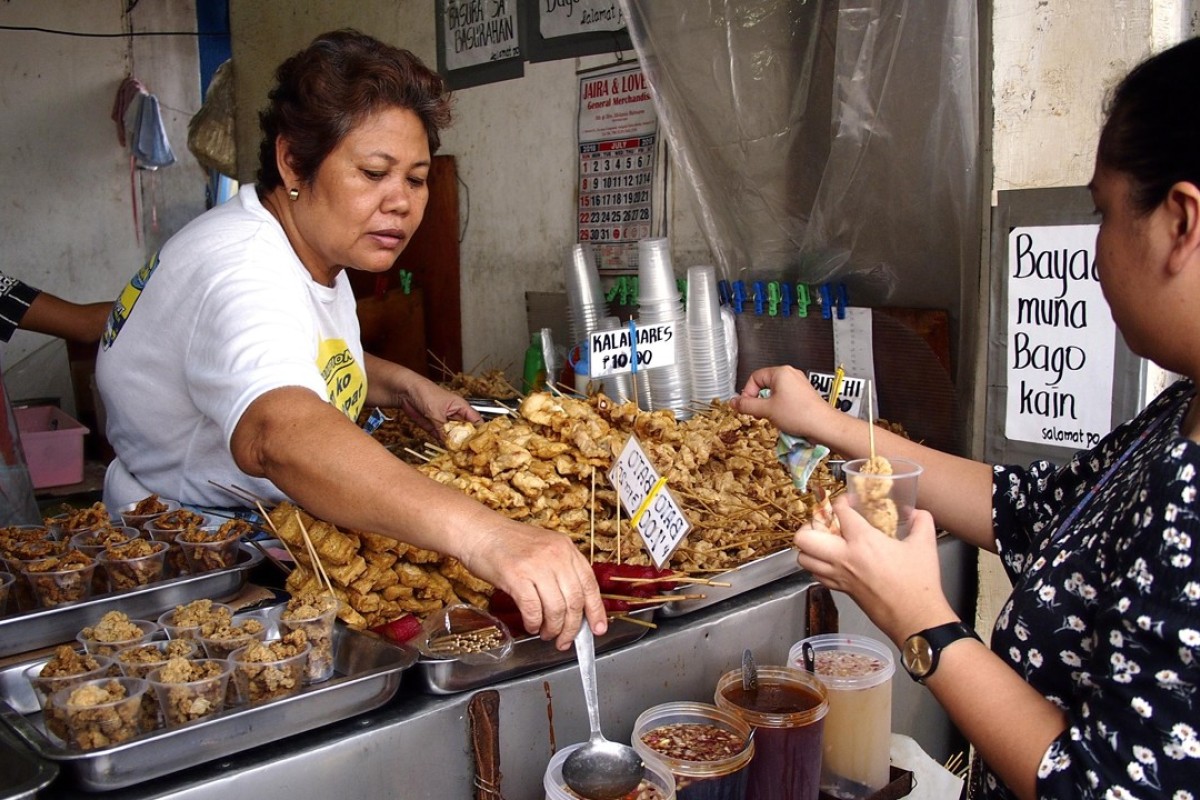
A carinderia in the Philippines. Picture: Alamy
A carinderia in the Philippines. Picture: Alamy

Many in Hong Kong have been belatedly celebrating the September 2017 inclusion of Hong Kong English expression “add oil!” in the Oxford English Dictionary. The most recent update, released this month, includes 1,400 entries that hold novel lessons, exemplified by the Philippine English words.

The etymologies of these words span several languages, reflecting the diversity of cultures in the Philippines. Some of the words originate, expectedly, in Tagalog, a major indigenous language and the basis of the national language, Filipino: one example is “bagoong” (a fermented or salted fish paste).

Others come, also predictably, from Spanish, a legacy of 333 years of colonisation. The deep-fried pastry-covered fruit “turon”, from the Spanish almond-and-honey nougat called turrón, entered Philippine English via Tagalog.

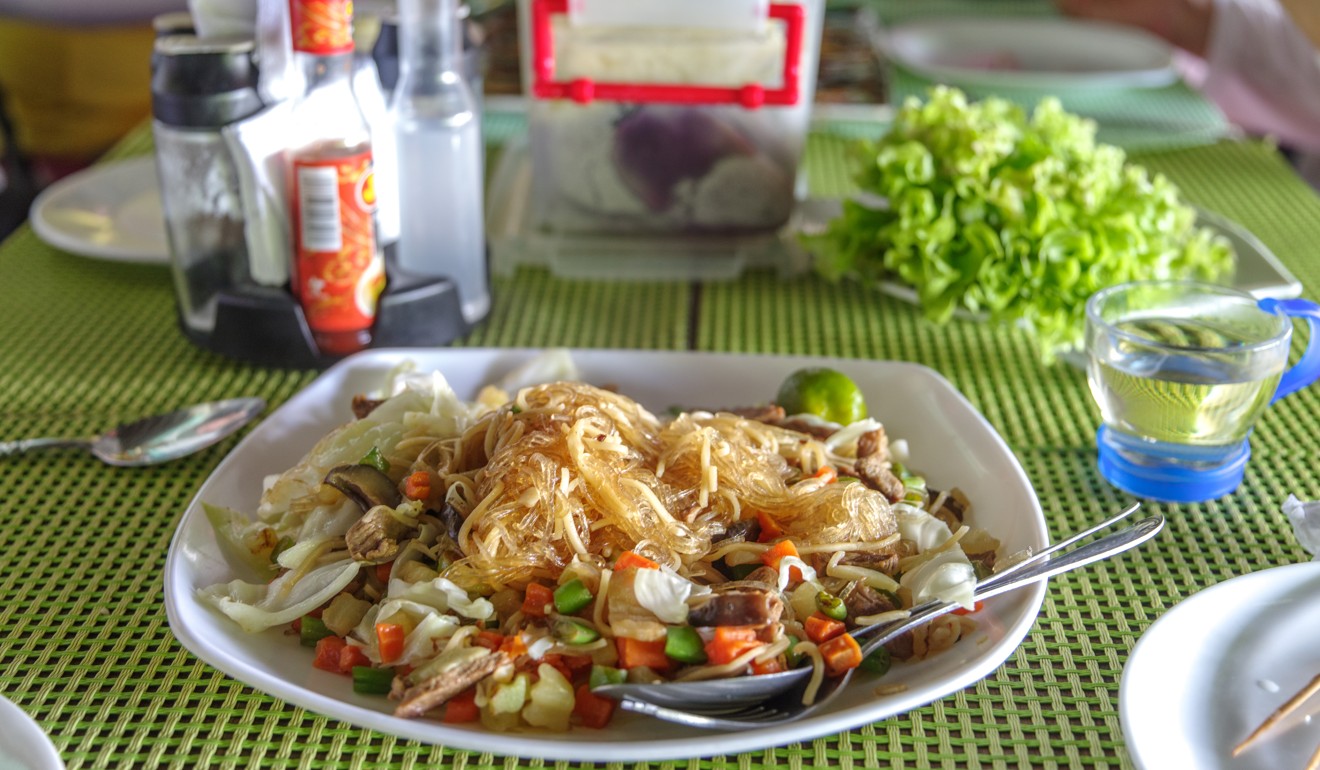
Other words reflect less-considered but long-standing communities. “Bihon” (“noodles”), which entered English from the Tagalog “bihon”, is derived from the Hokkien “bí-hún” (“rice flour”, “rice noodles”). Similarly, the Tagalog “pancit” (“noodles”) in panciteria – an inexpensive restaurant typically serving noodle dishes – is ultimately from the Hokkien “piān-ê-sit” (“convenience food”), narrowing to mean “noodles” later.

These words testify to the Chinese communities’ significance, specifically those from Fujian province, who comprised most Chinese settlers in the 1800s, and Chinese hawkers catering to colonial Spanish Philippines working women.

Panciteria, with the Spanish suffix -tería (“a place where something is done”) – as in “cafeteria” – demonstrates a multi­lingual blend. So does “carinderia”, a roadside cooked-food stall, where the Tagalog “kari” derives from the Tamil “ka i ” (“curry”), recalling the Philippines’ wide-ranging South Asian presence: from pre-Hispanic Hindu kingdoms; Gujarati merchants in the 17th-century; and sepoy troops arriving during the British occupation of Manila (1762-64); to Indian businessmen of the 1930s and 40s.


A simple pancit dish of fried noodles.

These words were brought to the OED editors’ attention by Philippine English speakers through a crowdsourcing initia­tive. This underscores the point of dictionaries: not to pres­crip­tively instruct correctness, but represent actual usage in language varieties, with words being included once a commu­nity of speakers demonstrates widespread, systematic use.


Pinoy farmer finalist in International Cocoa Awards

Filipino farmer makes it to the finals of 2019 International Cocoa Awards Antonio Colina Manila Bulletin 18 August 2019 DAVAO CITY ...