Showing posts with label Scientist. Show all posts

Saturday, August 17, 2019

Philippines is on Space Age


Philippines breaks new ground with own space agency


Japan Times | Kyodo
17 August 2019


The Philippines is entering a new phase in science and technology under a new law creating a space agency, a move officials say will have positive effects on national security and public welfare.
The Philippine Space Act was signed by President Rodrigo Duterte on Aug. 8. It will govern the country’s space development and utilization policy.


“This piece of legislation will bear fruits that generations to come will be enjoying,” Fortunato dela Pena, the Filipino science and technology secretary, told a news briefing Wednesday, acknowledging that the data collected from space technology will have multiple significant applications on the ground.
In an earlier interview, Rogel Mari Sese, a Filipino astrophysicist who helped craft the law, said it was a long time coming.
“Space is no longer a luxury when it comes to national development and security. It’s a necessity,” Sese said.
Sese said the creation of the Philippine Space Agency (PhilSA) is in the administration’s Philippine Development Plan 2017-2022, and in its National Security Policy.
Based on the law signed by Duterte, the space policy will focus on six areas — national security and development, hazard management and climate studies, space research and development, space industry capacity building, space education and awareness, and international cooperation.
A Philippine Space Council, to be chaired by the president and composed of other key members of the Cabinet, was also created to act as the principal advisory body.
“Now we can have an agency that can move on its own, without depending on other agencies, to implement whatever plans (and) policies (that) will be crafted coming from the Philippine Space Council,” dela Pena explained.
PhilSA will be situated in the Clark Special Economic Zone, north of Manila, and dela Pena hopes the facility will be ready before the Duterte administration ends in 2022.
“We have to be pragmatic in the beginning. We probably start off continuing what we’re doing and have momentum (in) building these small satellites,” said Joel Marciano of the Department of Science and Technology’s Advanced Science and Technology Institute when asked about expectations for PhilSA’s first years in operation.
While the Philippines has been tapping space technology for more than a century already, it was not until the advent of the new millennium that it began engaging more actively in space-related endeavors.
In 2014, the country adopted a micro-satellite program that honed local engineers to produce Diwata 1, Diwata 2 and Maya 1, which were all subsequently launched into space via foreign facilities.
After investments and preparations made over several decades, dela Pena declared in January that the Philippines was ready to have its own national space agency. He said his department has invested around 7.5 billion pesos (almost $143 million) since 2010 in space research and development, and already has more than a thousand experts in space science.
There are also 25 space-related facilities operating nationwide, 15 programs and projects being implemented by different agencies and universities, and eight international institutional collaborations for space research and development.
The academic sector has also been responding to the growth of the space industry, with some universities offering space-related courses.
Enrico Paringit of the Philippine Council for Industry, Energy, and Emerging Technology Research and Development spelled out the practical benefits key sectors in the country stand to receive from space technology.
“We can monitor vessels out there in the sea. … This can also support our fisher folk, not just to monitor where they are but also where to efficiently fish. … We can also monitor our agricultural productivity. … We can monitor real-time, with these capabilities in place, where deforestation and degradations are taking place. … We can monitor situations in disaster-stricken areas,” Paringit said.
In the global community, dela Pena said, the Philippines can contribute more knowledge, “since we will be accumulating a lot of information and data.”
“If our data scientists will work on the data and information that we are able to collect, there will be new knowledge that can be generated, and there will be models that can be presented,” he said.
The country will also be better poised to air any concerns on space issues in international gatherings, such as those in the United Nations.
Marciano of the DOST expects that the establishment of the PhilSA will encourage Filipino space scientists abroad to return home, as well as inspire young Filipinos to seek careers or professions related to space.
“We’re not precluding the possibility of it later on — that a Filipino would be in space,” he said.
“If we’re to send somebody in space … we want it to contribute something meaningful, maybe do an experiment in the space station, an experiment that is born out of local research,” he added.
But the prospects of the Philippines having its own rocket launcher remain remote “because it costs a lot of money,” Marciano said.
According to the law, an initial operating fund of 1 billion pesos has been appropriated for PhilSA, with a 10 billion peso Philippine Space Development Fund created exclusively for capital outlays. The agency is also permitted to generate income from its specialized products, services and royalties, as well as accept grants and donations and secure loans.
Lawmaker Carlos Zarate of the progressive sectoral group Bayan Muna (People First) views the establishment of PhilSA as another case of the government’s wrong prioritization in terms of fund allocation.
“There’s nothing wrong in being ambitious. … But that 10 billion pesos can go a long way if we improve our agriculture sector. We even have a problem in our health sector, which is also being deprived of funds. Our social services are facing big problems,” Zarate said in an interview before the law was passed.
But Sese, the astrophysicist, said that based on a study his group conducted, the average return for every peso invested in space technology or a space program is 2.5 pesos, which, he said, is a “very conservative estimate,” citing the global rate of “$4 for every $1.”

Sunday, July 7, 2019

PH Top Asian scientist

Pinay scientists recognized as among top in Asia


ABS-CBN News
03 Jul 03 2019


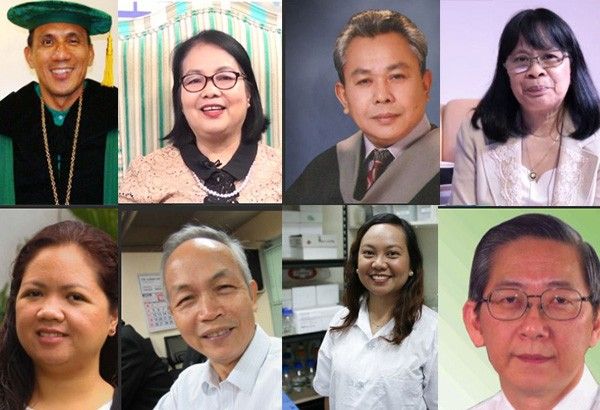
Eight Filipino scientists were recognized as among the top 100 scientists in Asia by a prestigious publication. 
Dr. Rosalinda Torres was among the 8 researchers recognized in the Asian Scientist 100, for her work on the larvicidal ability of Philippine medicinal plants. 
Another Filipina, Marissa Paglicawan, was also recognized for her work on turning abaca or Manila hemp into an engineering material. 
Asian Scientist says that to be acknowledged on the list of top 100 researchers, a scientist must have received a national or international prize in 2018 for research, or made a significant scientific discovery or provided leadership in academia or industry. 

Thursday, June 20, 2019

New Specie of shipworm in PH

Rock-Eating Shipworm Discovered in Philippines


Enrico de Lazaro 
Sci-news.com
Jun 20, 2019 


An international research team led by Northeastern University marine biologists has discovered a new genus and species of shipworm burrowing into the bedrock of the Abatan River on the Philippine Island of Bohol.
Shipworms (family Teredinidae) are a group of predominantly marine, wood-boring and wood-feeding bivalve mollusks.
Rock-boring and rock-ingesting Lithoredo abatanica shipworms live in carbonate limestone bedrock in the Abatan River on the Philippine Island of Bohol. Image credit: Dan Distel.
Known in the literature since the 4th century BCE, these creatures are the primary consumers of woody materials across the world’s oceans.
In contrast, the newly-discovered shipworm — named Lithoredo abatanica — lacks adaptations associated with wood-boring and wood digestion.
Lithoredo abatanica is not a wood-borer and lacks the anatomical and morphological specializations typically associated with wood-boring and wood-digestion in other species,” said Dr. Reuben Shipway of Northeastern University and colleagues.
“It burrows into and ingests limestone, which accumulates in the guts of animals and is expelled from the siphons as fine-grained particles.”
“This strategy of burrowing into rock by ingestion is, to our knowledge, unique among the animal kingdom.”
The specimens of Lithoredo abatanica were collected from deposits of soft limestone in the Abatan River as part of a Philippine Mollusk Symbiont project expedition.
“The shipworms had entirely reshaped the riverbed ecosystem,” the scientists said.
“The rocks at the bottom of the river were covered in holes, many with tiny shipworm siphons protruding into the water.”
“Any burrows the shipworms had abandoned were now home to small fish and crustaceans.”
A paper reporting the discovery was published this week in the Proceedings of the Royal Society B.
_____
J. Reuben Shipway et al. 2019. A rock-boring and rock-ingesting freshwater bivalve (shipworm) from the Philippines. Proc. R. Soc. B 286 (1905); doi: 10.1098/rspb.2019.0434

Thursday, May 23, 2019

PH senate honored Pinoy scientists

Pinoy scientists hailed for work in medicine, astronomy, other fields

ABS-CBN News
 May 23 2019


MANILA—The Senate applauded a Filipina doctor and 8 scientists for "bringing pride and prestige to the country."

Under Senate resolutions 882 and 923 adopted Wednesday, the upper chamber honored Dr. Gay Jane Perez for winning first place at the 2018 Asian-US Science Prize for Women and 8 Filipinos who were among the Asian Scientist 100 (AS100).

Perez, who was up against 7 other scientists from Southeast Asia, was honored for her work using satellite date to forecast drought, which could help farmers identify ideal planting areas and seasons to improve their yield.

The 8 scientists recognized were: Lucille Abad, Philip Alviola, Nathaniel Hermosa II, Mario Antonio Jiz II, Lanndon Ocampo, Jeffrey Perez, Rogel Mari Sese and Aletta Conception Yñiguez.

Abad was credited for working on irradiated carrageenan as food supplement for plants. A carrageenan is a substance extracted from a specific type of seaweeds.
Alviola was recognized for his study on wildlife, while Hermosa was honored for his research on light and light-matter interaction.
Jiz did a research on a disease caused by a type of parasitic flatworm and developing a vaccine, Ocampo made contributions in manufacturing sustainability, while Perez was credited for studies on fault lines and earthquakes.
Sese was recognized for his contributions in astrophysics and his space-research advocacy, while Yniguez for her work in marine biology and fisheries.
“To be recognized as an honoree of AS100, one must have received a national or international prize in 2017 for scientific research or leadership,” said outgoing Sen. Bam Aquino, who authored the resolutions.


Thursday, May 9, 2019

Pinoy wins US engineering design contest

18-year-old Filipino student wins engineering design competition in US


Wednesday, May 8, 2019

Asia's best scientists

Filipino scientists named as among Asia’s best 


Jan Milo Severo
Philippine Star
08 May 2019


MANILA, Philippines — Eight Filipino scientists have made it in this year’s Asian Scientist Magazine’s “Asia Scientist 100,” which aims to raise the profiles of outstanding scientists from the region. 

“Asia Scientist 100” is an annual listing of the Asia-Pacific region’s award-winning researchers, academicians, innovators and business leaders. 


Filipino scientists in Asian’s Scientist Magazine’s “Asia Scientist 100” 2019 list 

The eight Filipino scientists included in the list are Technology Development Institute’s Dr. Rosalinda C. Torres (Chemistry), Technology Development Institute’ Dr. Marissa A. Paglicawan (Material Science), University of the Philippines (UP) Los Baños’ Artemio Salazar (Agriculture), UP Manila’s Rody Sy (Biomedical Science), UP Diliman’s Gay Jane Perez (Environmental Sciences and Geology), UP Diliman’s Charissa Marcaida Ferrera (Life Sciences), De La Salle University’s Elmer Dadios (Engineering) and University of Santo Tomas’ Ricardo Balog (Engineering).
According to Asian Scientist Magazine, the AS100 list highlights research excellence and seeks to raise the profile of early career and veteran scientists in Asia who have made significant impact on their respective scientific disciplines.

From material scientists to molecular biologists and particle physicists, the AS100 (2019 edition) aims to celebrate the achievements and diversity of the research scene in the region, the magazine explained.


“We hope that with our yearly publication of the ‘Asian Scientist 100,’ outstanding researchers from Asia will be recognized for their fervent passion to further scientific knowledge and impact people’s lives,” said Dr. Juliana Chan, the magazine’s editor-in-chief.


Sunday, April 14, 2019

Filipino inventions

Everyday Life Inventions That Are Filipino


Inventions by Filipino inventors include the graphics accelerator chip, wearable camera, and the lunar rover.

Marcia Wendorf
Interestingengineering.com
14 April 2019


The next time you watch a video on your PC or play a video game, consider thanking Filipino inventor Diosdado Banatao who invented the graphics accelerator chip for personal computers.


Banatao was born to a poor rice farmer in 1946, and walked barefoot on a dirt road to elementary school. Following high school, Banatao graduated from the Mapúa Institute of Technology with a degree in electrical engineering. He then went to work for Philippine Airlines as a pilot, but was soon working in the U.S. at the Boeing Corporation.
Banatao attended prestigious Stanford University, where he graduated in 1972 with a Master of Science degree in Electrical Engineering and Computer Science. Working at Commodore International, Banatao designed the first single chip, 16-bit microprocessor-based calculator, which endeared him to high school students everywhere.
Banatao was then credited with creating the first system logic chip set for IBM's PC-XT and the PC-AT, the local bus concept, and the first Windows graphics accelerator chip for personal computers. This latter discovery allowed computers to work much faster, and allowed users to interact with computers graphically rather than just through the command line.
Banatao went on to receive a Ph.D. from Stanford University in mixed-signal CMOS IC design, and he has received numerous awards, co-authored 13 papers, and holds six U.S. patents.

The Lipstick Camera

Just before the turn of the 21st Century, Filipino Marc Loinaz invented the one chip video camera. Working with a team at Lucent Technologies in the U.S., they were tasked with creating a camera that was so cheap and used so little electrical power, that it could be integrated into things, such as watches and appliances.

Wearable camera
Earlier video cameras generated images by using charge-coupled devices (CCDs), but CCDs could not occupy the same silicon chip as image sensors. Loinax and his team got the analog circuits to occupy the same chip as the digital signal processing circuits by teaching them to ignore one another.
Loinax described the process as: "We scheduled operations on the chip so that during all the sensitive analog operations, we shut down the digital circuits." Today, these so-called "lipstick cameras" show up on daredevil's bodies, Formula 1 racing cars, and the table rail of poker tables during tournaments, where they "spy" on players' cards.

A Passion for Children

In 1933, Filipino woman Fe Del Mundo completed her medical education at the University of the Phillippines. Then Philippine president Manuel Quezon, provided her a scholarship to continue her medial education anywhere she wanted, and she chose to study pediatrics at Harvard University in Boston, Massachusetts.
In 1941, Del Mundo returned to the Philippines just before that country was invaded by Japan. Del Mundo worked with internees during that tumultuous time, and following the war, she went on to establish her own pediatric hospital.
Infant incubator
Completed in 1957, the Children's Medical Center in Quezon City was the first pediatric hospital in the Philippines. The use of the incubator for premature babies was pioneered at the hospital.

Joy Riding on the Moon

In 1971, the Apollo 12 mission to the moon used the first "Moon Buggy" to explore the moon's surface. Created by a team at NASA that included Filipino mechanical engineer Eduardo San Juan, the Lunar Rover was also used during last three Apollo lunar missions, 15, 16 and 17, which took place during 1971 and 1972.


Weighing 460 pounds, the rover was designed to hold a payload of 1,080 pounds. It was 10 feet long, with a wheelbase of 7.5 feet, and was 3.6 feet tall. The rover had a three-part chassis that was hinged in the middle so that it could be folded up and hung in the Lunar Module Quadrant 1 bay. Today, three abandoned lunar rovers remain on the moon.

Pinoy farmer finalist in International Cocoa Awards

Filipino farmer makes it to the finals of 2019 International Cocoa Awards Antonio Colina Manila Bulletin 18 August 2019 DAVAO CITY ...