Showing posts with label religion. Show all posts

Saturday, June 22, 2019

The Filipino Schindler (movie)

The Filipino Schindler: How the country's former president saved hundreds from the Holocaust

Chris Neebould
The National (UAE)
22 June 2019


In the opening scenes of Quezon’s Game, a newsreel plays harrowing images of concentration camps and the atrocities carried by the Nazi Party. As the reels plays, an ailing president of the Philippines, Manuel Quezon – head of a government in exile at the end of the Second World War – turns to his wife and asks: “Could I have done more?”

The real Manuel Quezon, who was president of the Commonwealth of the Philippines from 1935 to 1944. Alamy
It’s a fair assumption that most of the audience at screenings won’t know what he’s referring to. Is it his becoming the first elected president of a fully unified Philippines? 
His successful land reforms? His attempts to free the nation’s economy from the shackles of foreign ownership? His war on corruption? Or his leading of a ­government- in-exile in the US following the Japanese occupation of his homeland?

In fact, he’s not talking about any of these things, but about a little-known period in his presidency, one that doesn’t feature in many history books and remains a mystery to a vast majority of Filipinos.

Kate Alejandrino, right, stars as Maria Aurora “Baby” Quezon. Courtesy Film Freeway
Thanks to his actions, Quezon can reasonably be described as Asia’s equivalent of Oskar Schindler, the German industrialist credited with shielding more than 1,000 Jews from the Holocaust by employing them in his factories.

Between 1938 and 1941, Quezon concocted a plan with his American poker-playing buddies – Paul McNutt, the US high commissioner, Philippine residents and cigar magnates the Frieder brothers, and Dwight ­Eisenhower, then chief of the US military in the islands.

Their idea would mean Quezon issued visas and assisted with transport to smuggle around 1,200 Jews out of Nazi-occupied Europe and resettle them in the Philippines. Had Quezon’s plans gone perfectly, he would have rescued more than 10,000 lives. He had already built a ­village where successful escapees could have lived and worked in the city of Marikina, and had declared the southern island of Mindanao a safe space where he hoped to settle a ­further 10,000 European Jews. Sadly, the Japanese invasion of the Philippines in 1941 cut his scheme short and the president was forced to flee his homeland to establish his ­government in exile.
Manuel Quezon with his son, Manuel Jr, his wife, Dona, and his daughter, Maria. Corbis via Getty Images
The story was lost on the shelves of history, but now British filmmaker Matthew Rosen, a long-time resident of the Philippines, has brought the tale to the big screen – picking up more than 20 international festival prizes on the way. The film is currently in cinemas in the Philippines, while Filipino channel ABS-CBN, in association with the Philippine Embassy in the UAE, is planning select UAE screenings soon.

Rosen has been making films in the Philippines since the 1980s, after he was brought over as a cinematographer on a six-month contract by a British producer. That contract was extended to a year, and by then he’d fallen in love with both the country and his wife-to-be. He never left.

The tale of how he came across this particular story, which even his ­Filipina wife was unaware of, is almost as incredible as the story itself. “I found out totally by accident,” he admits. “I’m a British Jew, living in the Philippines with my wife, and we went back to the UK for a Jewish wedding. When we started singing [traditional Jewish wedding song] Hava Nagila, my wife knew all the words and dance moves.”
Raymond Bagatsing, Billy Ray Gallion, and David Bianco in 'Quezon's Game'. Courtesy Film Freeway

Upon quizzing his wife Lori on her sudden command of Hebrew, he discovered that she used to sing the song on the streets of her hometown as a child, and had always assumed it was a Filipino song in a dialect she didn’t understand.
Rosen looked further into the mystery on returning to the Philippines, where a visit to a museum in the back room of a synagogue revealed that the area where his wife had grown up once had a sizeable Jewish population. Slowly, the puzzle began to fit together, and once Rosen had managed to track down the surviving family members of both Quezon and the Frieder brothers, the full scale of the joint US-Filipino evacuation efforts came to light.
There is still a small Jewish ­community in the Philippines, Rosen adds, although most of those who came over during the Holocaust left when the war finished – the Japanese destroyed the village they had moved to, which was on the site of what is now Marikina City Hall. Although the filmmaker notes that the local Jewish community had some knowledge of the events, the Filipino community had none at all. “I just felt this was a story that needed to be out there. Quezon was a hero,” he says.
With the story complete, there was still one major challenge ­remaining for Rosen – getting the film ­funded. The Filipino cinema market is ­traditionally skewed towards ­romance, comedy and the occasional big action flick. Historical drama is not something the local industry is known for. It’s perhaps doubly surprising, then, that not only did Rosen successfully raise the film’s reported $500,000 (Dh1.8 million) budget, but he did so through the Philippines’s biggest mainstream TV and cinema conglomerate, ABS-CBN.
“It was really difficult, and ABS was not the first place we tried,” he admits. “It took us three years of solid pitching. We’d been turned down by almost everyone else, but we hadn’t tried the big houses first, because we didn’t think this was the kind of film they’d make. We’d been trying to pitch to government agencies and indies, but absolutely nobody wanted it.”
Rosen could perhaps have saved himself the trouble – his last resort loved the idea, and took it on board almost immediately: “We should have gone there first as they saw something they liked and it was settled very ­quickly,” he says.
Audiences seem to have bucked the trend of eschewing historical dramas, too, perhaps understandably given this fascinating lost story about one of their national heroes. The film is already in its third week in Filipino cinemas, and the director reports that it is still playing to packed houses and may extend its run.
Rosen’s next plan is to get the film out to wider audiences internationally. Quezon’s Game is filmed 80 per cent in English, with the remainder in subtitled Spanish and Tagalog, and its impressive festival run at the turn of the year should bode well for international audiences, too.
ABS-CBN in Dubai hasn’t yet confirmed the exact details of its planned UAE screenings, but perhaps the film’s runaway success back home could tempt them to give it a wider opening.

Monday, June 10, 2019

PH, a Jewish home

How Jews secretly found a home in the Philippines 

CNN Philippines
10 June 2019


Manila (CNN Philippines Life) — Enamored by the worlds of kings and prophets rooted in the Hebrew Bible, Yehudah*, 28, was curious about the Jewish faith ever since he was a child. He grew even more intrigued when he learned that the Israel of the ancient world is still alive today, right there at the center of the world map — proof, to him, that the God those old prophets proclaimed stayed faithful to His promises. He wanted to know this God. He wanted to be close to Him, just as the Israelites were.

The Jewish synagogue in the Philippines is a melting pot of Israelis, North Americans, and Filipinos, a close-knit community of Jews that gather in a simple, serene hall. Pictured above is an authentic Torah scroll that can be found in the synagogue. Photo by JL JAVIER

But for a young Filipino born into a Christian family in a predominantly Catholic country, learning the faith on his own was not easy.

He did not have the money or a passport to fly to Israel. He could not find all the rules and prayers to follow, despite spending hours reading about Judaism in local bookstores and on the then scant sources of the Internet. He felt becoming a Jew was close to impossible.

A frustrated teenager, Yehudah told God, “If You won't let me come closer, then I will run my life my own way.”

And so he did. In college, he stopped praying, save for the few times he was desperate for help or angry with God. When he joined the workforce, he poured himself into a demanding job at a local NGO, hoping that this identity as a young, secular professional working hard to serve his country would give his life meaning. But, alas, he found himself still yearning for purpose.

By the time he turned 26, it was time for Yehudah to accept what he had long known. He was called to be a Jew.


Inside the Beit Yaacov Synagogue, the only synagogue in the Philippines located at Salcedo Village in Makati City. Photo by JL JAVIER

A Filipino story

On Nov. 9 and 10, 1938, Nazi mobs destroyed hundreds of synagogues, attacked thousands of Jewish-owned stores, and arrested roughly 30,000 Jews in Germany. This was the Kristallnacht, also known as the Night of the Broken Glass — alluding to the shards of glass windows that littered the streets of Germany in its aftermath.

Less than two weeks later, 2,000 Filipinos filled the fields of the Ateneo de Manila campus in Intramuros, protesting against the violence of Kristallnacht. Though a small Jewish community had been living in Manila at the time, Jews did not spearhead this protest. It was led by Senator Quintin Paredes and supported by Catholic and Protestant leaders and local civic groups.

“How they did it, why they did it, how they knew, why they even cared was an amazing thing,” says Lee Blumenthal, executive director of the Jewish Association of the Philippines.

When anti-Semitic policies began to intensify in Europe and many countries refused the entry of Jews in the 1930s, the Philippine government, together with the American High Commissioner Paul McNutt and members of Manila’s Jewish community, such as cigar manufacturers the Frieder brothers, devised a careful plan to save as many Jews as they could. Working around difficult U.S. immigration laws at a time when the Philippines was still a U.S. colony, the group found a way to take in Jewish professionals — doctors, engineers, accountants — who would appear to benefit the Philippine economy.

According to Blumenthal, while other countries had taken in Jews of their own nationalities, the Philippines was “the only country in the world that went out to save Jews that were not their own.”

Yet, eight decades since Manuel Quezon opened the doors of the Philippines to 1,300 Jewish refugees escaping the Holocaust in Europe, many Filipinos are only learning about the radical story binding Jews and Filipinos today. This is in part caused by brave efforts in recent history to tell this story. From the book “Escape to Manila” (2003), written by Jewish refugee Frank Ephraim, to the recently released award-winning movie “Quezon’s Game,” helmed by the British-Jewish director Matthew Rosen, much of these stories have been told by Jews themselves.

While Filipinos may tend to forget, Jews do not. Jews remember, and they are proud to tell us that this is our story to claim.

“This is a Philippine story, this is not a Jewish story. Filipinos did this,” says Blumenthal. “And we want to give back.”

Two days after Typhoon Yolanda hit the Philippines in 2013 and devastated thousands of lives and homes, Blumenthal received an urgent phone call from a man named Danny Pins, who was calling from Israel. He said he was with the American Jewish Joint Distribution Committee, and he wanted to help. He wanted to come to the Philippines and bring in a 150-person medical team and supplies of typhoon relief. He said this was very important to him: his own mother was one of those who found a home in the Philippines when the rest of the world closed its doors.

Painted on the ceiling of the synagogue are the Twelve Tribes of Israel and the Seven Gates to Jerusalem. Photo by JL JAVIER

Finding freedom in Jewish spirituality

It took Yehudah almost two years until he finally became a full-fledged Jew.

Soon after he made that choice to dive in, he contacted the rabbi leading the only synagogue in the country, entered their house of worship as a non-Jew, and after two interviews, joined a class on the basics of Judaism for conversion candidates.

Spending that time studying the rules and prayers he longed to learn as a child, Yehudah found freedom in the path paved by the Torah, also known as the Five Books of Moses, or the Jewish law — a law that shaped world civilization through both Christianity and Islam. Jews are also encouraged to question these laws.

Yehudah says that the Talmud, the text describing the Jewish law, is filled with arguments among rabbis on how to apply Judaism to daily life. They are taught to think, to question why God wants things done a certain way.

“Engaging in the same process with my conversion classmates and our rabbi, I found that the Torah's rules were not instituted haphazardly — you can see traces of love, compassion, and logic.”

Yehudah fell in love with the law along with the rituals, which he describes as simple yet profound.

Before and after partaking of any food, for instance, Jews recite short prayers. Yehudah says that these prayers help him remember that everything continues to exist only because of Hashem, and that even something as mundane as drinking water is considered a part of your life’s mission.

“And that,” he adds, “you should always be grateful to anyone for whatever help they give you.”

Yehudah says that the Talmud, the text describing the Jewish law, is filled with arguments among rabbis on how to apply Judaism to daily life. They are taught to think, to question why God wants things done a certain way. Photo by JL JAVIER

A home within a home

Just as their religion teaches, Jews who live in the Philippines today remain eternally grateful.

“In my 30 years living in this country, I have never faced anti-Semitism,” Blumenthal says with conviction and pride. “That is a wonderful thing. We feel accepted, and part of the country.”

When he began to transition into following the laws that govern the daily life of a Jew, Yehudah echoes a similar reception from his fellow Filipinos.

He recalls how his boss let him skip work on Saturdays so that he can practice keeping the Shabbat, the Jewish holy day of rest. His parents have long accepted that he will no longer be going back to church, and even help him prepare kosher food — food he is fit to eat based on Jewish law.

“When I walk through the streets of Makati wearing my kippah, a head covering symbolizing my submission to Hashem's will, people don't point and stare — unlike in Europe, where wearing a kippah might be dangerous.”

And just as Filipinos welcomed Jews with open arms, so did the Jews welcome Yehudah with warmth. A melting pot of Israelis, North Americans, and Filipinos, the close-knit community of Jews that gather in a simple, serene synagogue at the heart of Makati City never made Yehudah and his fellow converts feel like an outsider.

“I found that many people wanted to talk to me, maybe inspired by someone choosing the faith that they were born into.”

Today, Yehudah no longer feels conflicted between these two worlds. Instead, he considers himself lucky to be an ambassador of both. When he is with Israeli or American Jews, he does his best to represent the Filipino as helpful, respectful, and hard working. Recognizing that he may be the only Jew that many Filipinos would ever encounter, he hopes to leave the impression of someone who is trustworthy and ethically responsible, of someone who loves to learn.

“My heart may have been formed by Hashem in Jerusalem, the center of the world, but the blood that runs through it is from Manila.”

Yehudah may have felt alone as a child, but now he proudly embraces his unique identity. He is a Jew. He is a Filipino. He says he is a private man, but he has a story to tell — one that began many years before he was born; one that did not discriminate against religion or race; one that is profoundly, radically human.

Living proof that the story between Filipinos and Jews remains unfinished, Yehudah is happy to speak for his people today.

He says, in a sense, he did not convert. He only went home.

*Name has been changed upon the request of the interviewee. Yehudah, the son of Jacob and Leah, means “to thank” in Hebrew.


Saturday, March 16, 2019

The Philippine flag is raised in this famed Paris museum—all because of our anting-antings


The playwright and curator Floy Quintos has exposed part of our secret soul in the City of Light. At the Musée du Quai Branly along the banks of the Seine, the exposition he put together explores the story of our amulets and the complex, hybrid nature of the Filipino faith .

Renee Ultado | Mar 16 2019 
ABS-CBN News


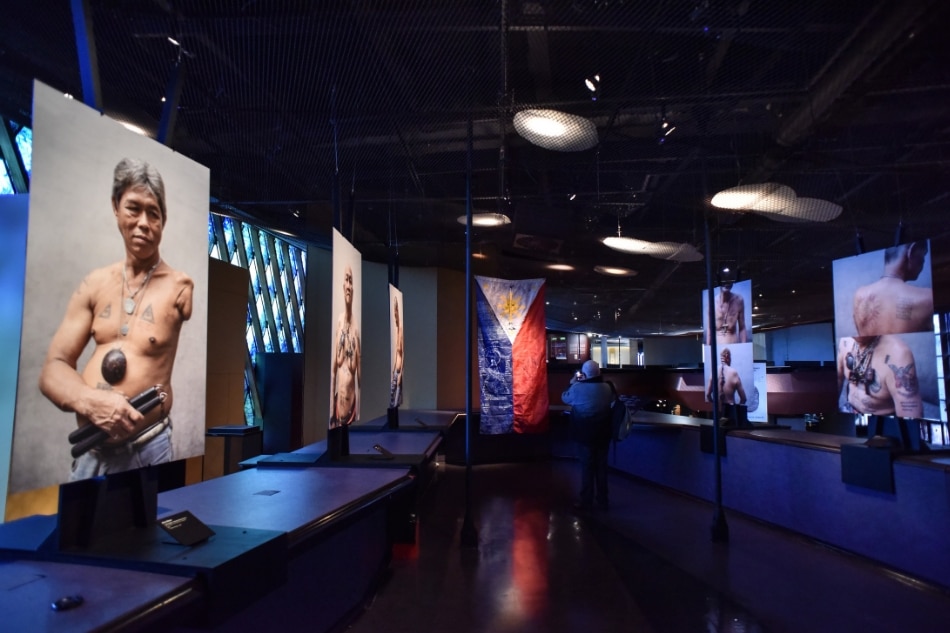
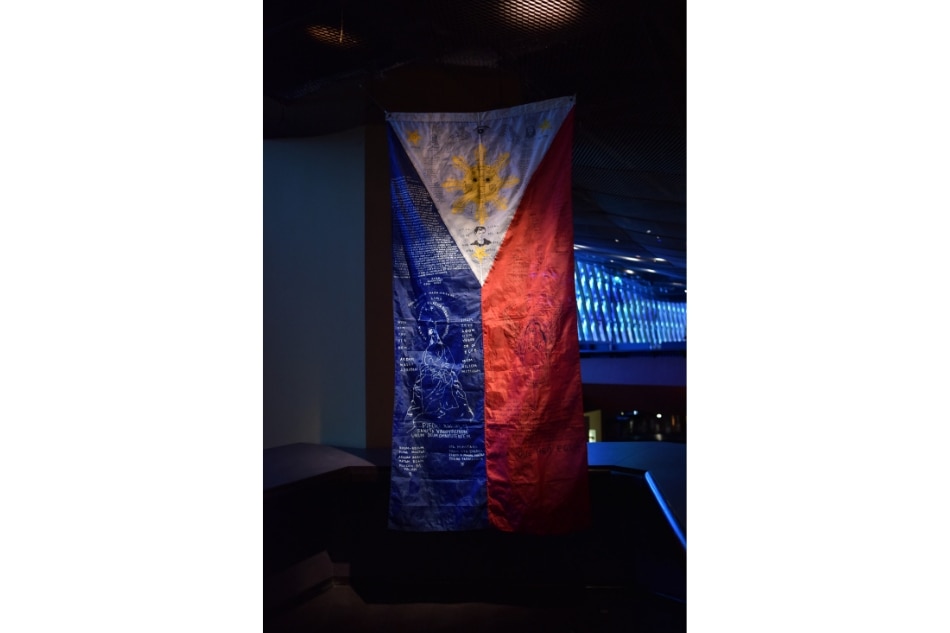
The Philippine Flag stenciled with sacred symbols and incantations, flanked by Dino Dimar photographs of current cult members wearing their anting-antings.

It was a windy Monday morning when the Musee du Quai Branly opened its doors to the press, collaborators, friends, and select patrons for the opening of two exhibitions for Spring. The buzzy Oceania assembles almost 200 archaeological objects and art pieces representative of the Pacific island cultures, while Anting-Anting—to which I was invitedis a more intimate installation telling the story of the historical and contemporary use of protective amulets, talismans, and charms in the Philippines.

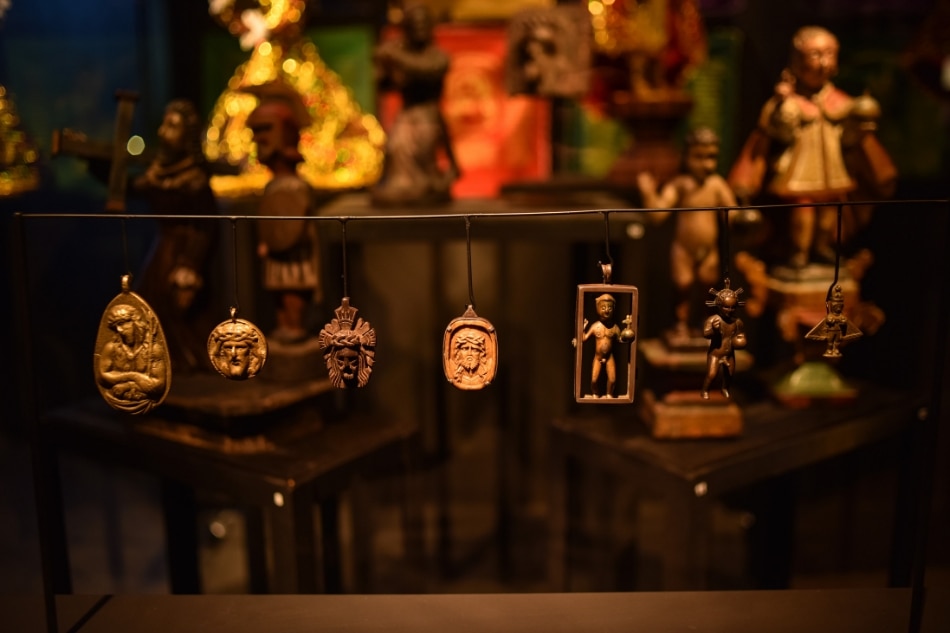
“This feels like coming home,” I said, soliciting a genuine noddy smile from the docent as she ushered me into the exhibit space, an obscure area floating above the museum’s permanent collection. It was a half-lie. While the Santo Niño, the Nazareno handkerchiefs, and the odd bits of brass jewelry looked familiar, the whole ensemble felt very foreign to me. Eerie and ominous almost. A physical manifestation of things I have only heard of before.

The exposition entitled Anting-Anting: The Secret Soul of Filipinos explores and demystifies these “charged objects” utilized by a myriad of Filipinos to this very day, from policemen to cult members. An offshoot from a previous exhibit at the Yuchengco Museum in Manila, the collection was built and curated by playwright, director, and antique dealer Floy Quintos.

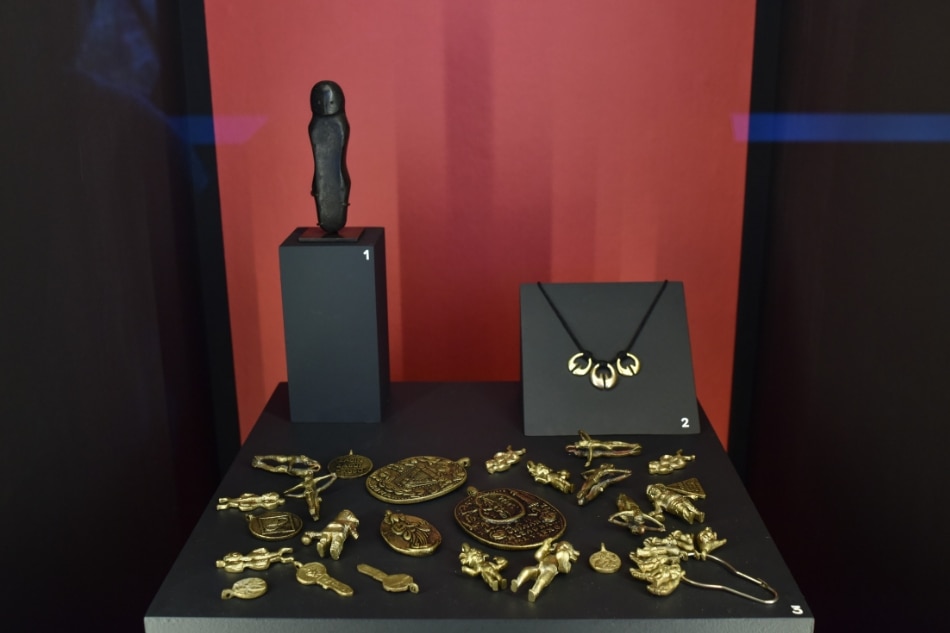
Images of Jesus Christ and the Santo Niño figure into these ancient amulets in brass and ivory, highlighting the Catholic influence on the animist nature of the anting-anting.

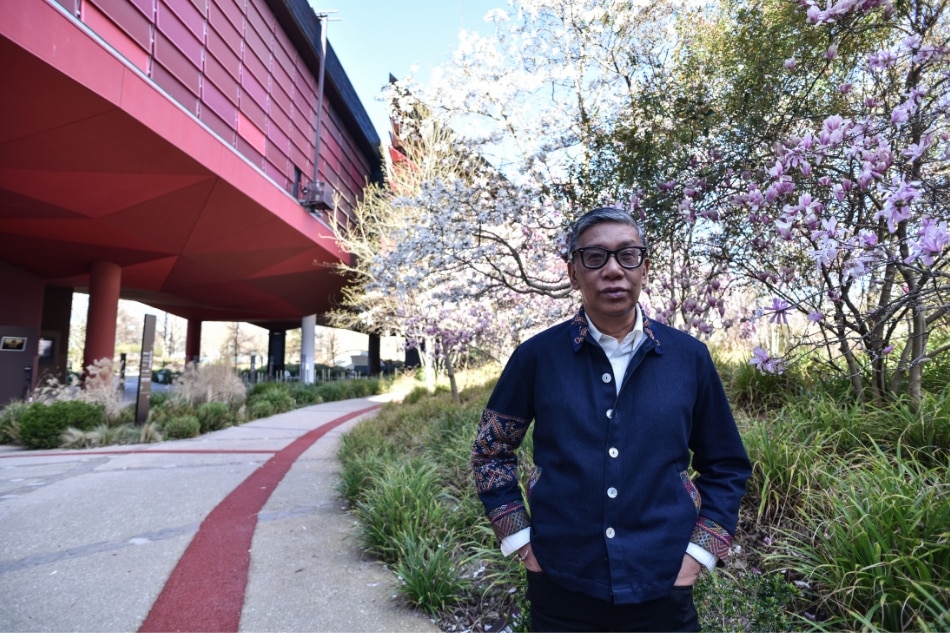
The invitation to show here in Paris came with challenges, mostly reworking the storytelling for a predominantly European audience. “My French colleagues would ask me, okay, how do the objects talk to me? How do we make them engage?” Quintos shares. He had to make the exhibit relatable and transportative even to people who have never been to our islands.

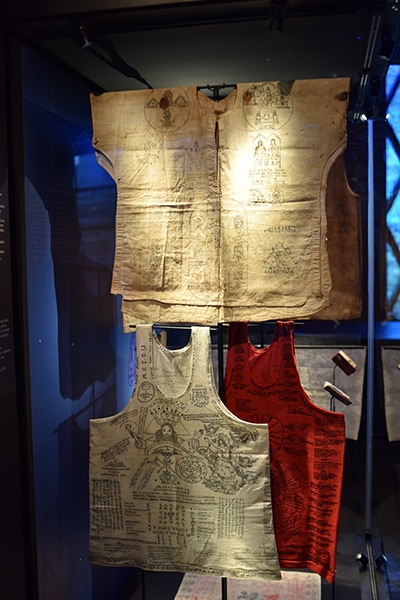
And transportative it was. Utilizing the Atelier Martine Aublet, a space designed to be a “contemporary cabinet of curiosities,” Quintos repackaged the exhibit into smaller pockets of stories. One corner shows Rizalista cult paraphernalia, another reveals blood-stained linen vests with pearl buttons believed to bestow protection against bullets.


In 1967, socio-political cult Lapiang Malaya marched into Malacañang, equipped only with bolos, anting-anting, and these stenciled shirts believed to make the wearer invincible against bullets.

On the other side, a wall glows with images from a Dino Dimar documentary following the journey of pilgrims to Mount Banahaw. The space is then infused with noises both familiar (the hypnotizing sound of a waterfall hitting the plunge, a solemn rendition of Ama Namin) and unfamiliar (orations in Pig Latin murmured from sacred booklets). One is given the impression of being in the caverns with the faithful as they pray, light candles, slither into crevices, and collect blessed water.

Quintos photographed outside the Musée du Quai Branly in Paris. “My French colleagues would ask me, Okay, how do the objects talk to me? How do we make them engage?” Photographs by Claudio Fleitas.
Some bearing iconographies from the Catholic religion, the anting-anting is one of the many portraits of Hispano-Filipino postcolonial hybridity. Did the Spanish try to make their Gospel more relatable, and the process of evangelization smoother, by incorporating bits and pieces from the native religion? Or did the Filipinos feign allegiance to the Catholic faith while discreetly continuing their animistic ritual under the nose of the colonizer? “That’s the question. It was the kind of dialogue we wanted to highlight,” says Quintos.

The hi'wong is an Ifugao shaman's amulet functioning as a portable idol (1) while the Lingolingo, also from the Ifugao, is a golden pendant worn to ensure good health, fertility, safety, and bounty. Towering over a collection of commercially-produced amulets (3), it shows the potent pre-colonial origins of the anting-anting and its still-widespread use in contemporary society.
A special nook stripped of protective glass is transformed into a tienda of modern anting-anting, open for people to look closely and even touch. Here, they are less spiritual and somehow devoid of a deeper meaning. Quintos wanted to show how they are today more recognized as popular charms, tailored to augment the spirit or help fix daily woes. It is truly revelatory of the multiple ways we practice our faith in the present. I think of my mother, probably the most Catholic person I know, who keeps her Vatican rosaries next to a Buddha sculpture, or my peers who hear mass on Sundays but wander around with a rose quartz crystal in their coat pocket the rest of the week.
The Philippine flag stenciled with sacred symbols and incantation

The show ends in a juxtaposition of cheap, commercially-made trinkets stacked in a pile under an ancient portable idol carved from stone by the Ifugaos. It shows that the need to always carry a tangible piece of the divine, be it for protection or for luck, is universal and distinctly Filipino. It transcends class, languages, and cultures, and reminds us that everyone, from lovestruck tweens to jittery dispatched soldiers, could use a little help from beyond.

Photographs by Claudio Fleitas
The exhibit Anting-Anting : L'Âme secrète des Philippins runs from March 12 to May 26, 2019 at the Musée du Quai Branly - Jacques Chirac 37 Quai Branly, 75007 Paris, France

Pinoy farmer finalist in International Cocoa Awards

Filipino farmer makes it to the finals of 2019 International Cocoa Awards Antonio Colina Manila Bulletin 18 August 2019 DAVAO CITY ...