Showing posts with label Southeast Asia. Show all posts

Sunday, July 28, 2019

PH Youtube top market

Philippines among top markets for YouTube


Richmond Mercurio
The Philippine Star
28 July 2019


MANILA, Philippines — Video-sharing website YouTube is exploring more local partnerships as it intends to further expand its ecosystem in the country.

Vishal Sarin, director of YouTube content partnerships in Southeast Asia, said the Philippines is one of the video-sharing site’s most vibrant and fastest-growing markets.

Vishal Sarin, director of YouTube content partnerships in Southeast Asia, said the Philippines is one of the video-sharing site’s most vibrant and fastest-growing markets. businessworld
“The Philippines is an important market for YouTube,” said Sarin, noting that the number of creator channels in the country with more than 100,000 subscribers have grown by 20 times, while the number of media channels with more than one million subscribers increased 10 times from 2016 to 2019.

“Over the years, we have seen an immense growth not only in the number of people watching videos but also in creators starting their own channels and brands going digital to engage their consumers.

As we are committed to the Philippines, we plan to further grow the YouTube ecosystem by forging more local partnerships and developing creators outside of Metro Manila,” he said.

With the continuous growth of YouTube in the country where creators continue to bring new and locally-relevant content online, the company said more opportunities arise for media, advertisers, and even users who want to be creators and start their own channel.

Among YouTube’s key partners in the Philippines are Smart Communications, the wireless subsidiary of telco giant PLDT, and leading budget carrier Cebu Pacific.

Last year, Smart launched the Free YouTube Every Day program, providing a free hour of YouTube access daily for its mobile prepaid subscribers.

As a result of the program, Smart’s mobile data usage more than doubled year-on-year and service revenues from mobile data increased by 62 percent.

“At Smart, we strive to empower every Filipino through digital innovations that can uplift their lives. Partnering with YouTube enabled us to grow our business and at the same time connect more Pinoys to relevant and useful videos every day, creating meaningful impact to the lives of our customers,” PLDT and Smart senior vice president and head of consumer market development Oscar Reyes Jr. said.

Cebu Pacific, meanwhile, used YouTube to engage its target market when it launched its month-long anniversary campaign earlier this year.

“YouTube plays an important role in our omnichannel strategy. In the recent Super Seat Fest 3.3 Sale campaign, we reached over 20 million Filipinos and Cebu Pacific became the most searched brand during the campaign period. Most of all, consumers who booked flights during the 3.3 campaign grew thrice compared to our last major seat sale,” Cebu Pacific vice president for marketing and distribution Candice Iyog said.

Broadcast media giants ABS-CBN and GMA Network are also using YouTube to reach more audiences and to address their audience’s ever-changing needs by placing some of their key entertainment and music content on the video-sharing site.

YouTube, a Google company, was launched in May 2005 to allow billions of people to discover, watch, and share originally-created videos.

Friday, June 7, 2019

Coa-Cola's P1B PH investment

Coca-Cola to invest in P1B recycling facility in Philippines


ABS-CBN News
Jun 07 2019 

MANILA - Coca-Cola Philippines Inc said it would invest in a P1-billion food-grade recycling facility to help boost sustainability efforts in the country. 
The project, which aims to collect, sort, clean and wash PET (polyethylene terephthalate) bottles, is Coca-Cola's first major investment in a recycling facility in Southeast Asia, Coca-Cola Philippines said in a statement. 
"Coca-Cola has called the Philippines its home for 107 years and counting, and we want to do our part in ensuring sustainability within its shores," Coca-Cola Beverages Philippines Inc president and CEO Gareth McGeown said. 
Once completed, it is expected to improve PET collection and recycling rates in the Philippines and generate more jobs, Coca-Cola said.
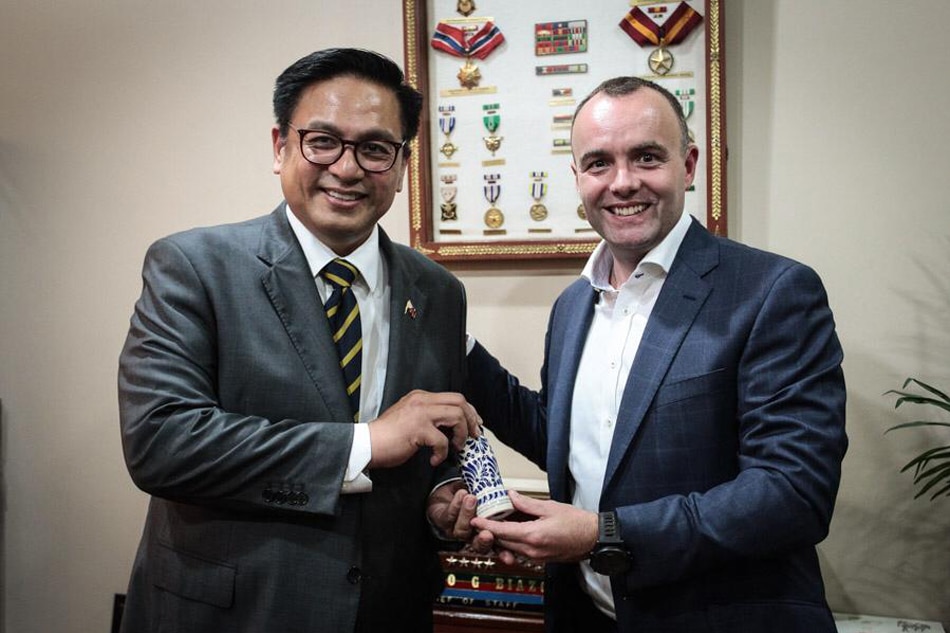
Gareth McGeown, President and CEO of Coca-Cola Beverages Philippines Inc met with Rep. Rozzano Rufino Biazon, principal author of House Bill 7903 also known as An Act Providing For The Phase-Out Of Single-Use Plastic Products, to discuss Coca-Cola’s plans on how to further improve the collection and recycling of PET plastic bottles in the country. Handout

The project is part of the company's "World Without Waste" global commitment, which aims to collect and recycle the equivalent of every bottle and can it sells by 2030, the beverage maker said.
All cans and bottles of Coca-Cola is "100 percent recyclable" and have value as a recycled material, McGeown said. 
Coca-Cola said it plans to use an average of 50 percent recycled content in its packaging, including PET bottles.

Wednesday, May 29, 2019

PH back in competition


Philippines’ competitiveness rebounds in 2019 — IMD

Ian Nicolas Cigaral
Philippine Star
29 May 2019


MANILA, Philippines — The Philippines’ competitiveness improved in 2019 on the back of rosy economic performance last year and higher labor force, according to a research group of Switzerland-based business school International Institute for Management Development.

Philippine economy
This Dec. 20, 2018 photo shows workers cleaning a panel of the building in UN Avenue, Manila. 
The Philippines’ competitiveness improved this year on the back of rosy economic performance 
last year and higher labor force, according to a research group of Switzerland-based business school International Institute for Management Development.The STAR/Krizjohn Rosales

The Philippines ranked 46th out of 63 economies tracked in IMD’s 2019 competitiveness report. This was higher than the Southeast Asian country’s previous ranking of 50th place in 2018.

Among 14 Asia-Pacific countries covered by the report, the Philippines placed at the 13th spot this year, unchanged from last year and just ahead of Mongolia and right behind India.

“This result was driven by a solid economic performance supported by sustained real [gross domestic product] growth (6.2% in 2018) and an increase in labour force and employment levels,” IMD said.

For its report, IMD said it evaluated “the extent to which a country fosters an environment where enterprises can achieve sustainable growth, generate jobs and, ultimately, increase welfare for its citizens.”

IMD looked into four factors — economic performance, infrastructure, government efficiency and business efficiency — in giving a final score for each country.

Broken down, the Philippines improved in the economic performance factor, placing 38th this year from 50th previously despite a decline in the international trade sub-factor. In terms of government efficiency, the Philippines climbed to 41th spot from 44th on the back of better institutional framework, business legislation and societal framework.

Under the business efficiency factor, the Philippines ranked 32nd from 38th mainly driven by better labor market and “attitudes and values.” Lastly, the Philippines jumped to 59th place from 60th in the infrastructure factor.

According to IMD, the Philippines needs to “speed up and sustain investments in physical infrastructure” and “sustain investor and consumer confidence.”

IMD then flagged the country’s “inadequate investment in human capital, poor digital competitiveness and future-readiness and persistent political risks.”

The rankings have been produced every year since 1989 by the IMD World Competitiveness Center.

This year, Singapore ranked as the world’s most competitive economy for the first time since 2010, knocking out the United States from the top spot to 3rd place amid higher fuel prices, weaker hi-tech exports and fluctuations in the value of the dollar.

Hong Kong held on to 2nd place, helped by a benign tax and business policy environment and access to business finance. Meanwhile, competitiveness across Europe struggled to gain ground this with most economies on the decline amid economic uncertainties.

“In a year of high uncertainty in global markets due to rapid changes in the international political landscape as well as trade relations, the quality of institutions seem to be the unifying element for increasing prosperity,” said IMD professor Arturo Bris.

“A strong institutional framework provides the stability for business to invest and innovate, ensuring a higher quality of life for citizens,” Bris added.

Thursday, May 23, 2019

PH senate honored Pinoy scientists

Pinoy scientists hailed for work in medicine, astronomy, other fields

ABS-CBN News
 May 23 2019


MANILA—The Senate applauded a Filipina doctor and 8 scientists for "bringing pride and prestige to the country."

Under Senate resolutions 882 and 923 adopted Wednesday, the upper chamber honored Dr. Gay Jane Perez for winning first place at the 2018 Asian-US Science Prize for Women and 8 Filipinos who were among the Asian Scientist 100 (AS100).

Perez, who was up against 7 other scientists from Southeast Asia, was honored for her work using satellite date to forecast drought, which could help farmers identify ideal planting areas and seasons to improve their yield.

The 8 scientists recognized were: Lucille Abad, Philip Alviola, Nathaniel Hermosa II, Mario Antonio Jiz II, Lanndon Ocampo, Jeffrey Perez, Rogel Mari Sese and Aletta Conception YƱiguez.

Abad was credited for working on irradiated carrageenan as food supplement for plants. A carrageenan is a substance extracted from a specific type of seaweeds.
Alviola was recognized for his study on wildlife, while Hermosa was honored for his research on light and light-matter interaction.
Jiz did a research on a disease caused by a type of parasitic flatworm and developing a vaccine, Ocampo made contributions in manufacturing sustainability, while Perez was credited for studies on fault lines and earthquakes.
Sese was recognized for his contributions in astrophysics and his space-research advocacy, while Yniguez for her work in marine biology and fisheries.
“To be recognized as an honoree of AS100, one must have received a national or international prize in 2017 for scientific research or leadership,” said outgoing Sen. Bam Aquino, who authored the resolutions.


Sunday, May 12, 2019

PH in 7% Club

Asian Economies Set to Dominate 7% Growth Club During 2020s


Saturday, March 30, 2019

World's Happiness progress

Philippines is 12th in happiness progress

Mar Mangahas
Philippine Daily Inquirer
30 march 2019


The World Happiness Report 2019 (WHR), released last week, ranks the Philippines as No. 12 in the world—and new No. 1 in Southeast Asia—in change in life-evaluation between 2005-08 and 2016-18 (http://worldhappiness.report/ed/2019/).

Note that the period is a full decade, spanning most of the Arroyo period, all six years under Noynoy Aquino and the first two years under Duterte.  The beginning and ending numbers being compared are three-year averages.  Credit for the progress between the two points therefore goes mainly to the Aquino time and partially to the Duterte time.


Chapter 2 of WHR2019 is “Changing World Happiness”; I heartily agree that it is more valuable to examine time-trends than to engage in Miss Happiness contests.  Its measure is scaled from the worst possible life (zero) to the best possible life (10) that the people surveyed can imagine. 

This is Cantril’s ladder, after psychologist Hadley Cantril, who wrote “The Pattern of Human Concerns” (1965).  (Interestingly, the ladder allows computation of “inequality of happiness”—which is high in the Philippines—but that’s a topic for another piece.)

The progressives. The five top gainers in WHR2019 are: 1. Benin +1.34, 2. Nicaragua +1.26, 3. Bulgaria +1.17, 4. Latvia +1.16, and 5. Togo +1.08.  Between them and 12th place Philippines (+0.86) are 6. Congo (Brazzaville), 7. Sierra Leone, 8. Slovakia, 9. Ecuador, 10. Uzbekistan, and 11. Cameroon.

This list shows that low-status countries are capable of progress in happiness.  It is refreshing to stop touting Finland, Denmark and Norway as the “winners,” since, after all, they reached their current high status in happiness only after many decades of social development.

The backsliders. At the opposite end are the worst five losers: 132. Venezuela -1.94, 131. Syria -1.86, 130. Botswana -1.61, 129. India -1.14, and 128. Yemen -1.10.

Gaining or losing at least 1.0 in the Cantril ladder, over a decade, is quite significant. The rest of the worst 10 are: 127. Central African Republic, 126. Greece, 125. Tanzania, 124. Malawi, and 123. Rwanda.

Other notable losers are Spain, Italy, United States, France, Japan and Canada.  Thus, high-status countries are not immune to backsliding either.  Of the 132 countries with data for starting and ending periods, 64 gained, 42 lost, and 26 stayed put.

The Philippines’ three-year average ladder score improved by +0.86 from 2005-08, to reach 5.63 in 2016-18.  Other Southeast Asian gainers were Cambodia +0.64 (25th in the world); Indonesia +0.24 (57th); and Thailand +0.23 (59th).

On the other hand, Vietnam -0.22 (96th), Laos -0.36 (107th), Singapore -0.35 (109th) and Malaysia -0.70 (117th) all lost ground.  In our region, half rose and half fell.

Change in regional climbing leadership. In last year’s WHR2018, which considered changes from 2008-10 to 2015-17, it was Malaysia, at +0.73, that led the gainers in Southeast Asia, followed by the Philippines +0.72, Thailand +0.30, and Cambodia +0.19.

The losers at that point were Indonesia -0.16, Singapore -0.16, Vietnam -0.26, and Laos -0.42 (see “Track happiness over time, not space,” Opinion, 3/24/18).  Now, Indonesia is a progressive, and Malaysia is a backslider.

Change in ranking of status after climbing. Both WHR2018 and WHR2019 have ladder scores for 156 countries.  

A country’s ranking on the world ladder depends on its relative (not absolute) climbing performance. The Philippines rose in status from No. 71 in WHR2018 to No. 69 in WHR2019.

Singapore maintained its No. 34 status. Thailand fell from No. 46 to No. 52.  Malaysia plummeted from No. 35 to No. 80 and was overtaken by the Philippines.  

Indonesia rose from No. 96 to No. 92, Vietnam from No. 95 to No. 94, Laos from No. 110 to No. 105, and Cambodia from No. 120 to No. 109.


Pinoy farmer finalist in International Cocoa Awards

Filipino farmer makes it to the finals of 2019 International Cocoa Awards Antonio Colina Manila Bulletin 18 August 2019 DAVAO CITY ...