Tuesday, December 18, 2018

China's billion dollar investment in PH

China's HBIS to invest in $4.4-billion steel project in Philippines


Reuters | ABS-CBN News
18 December 2018

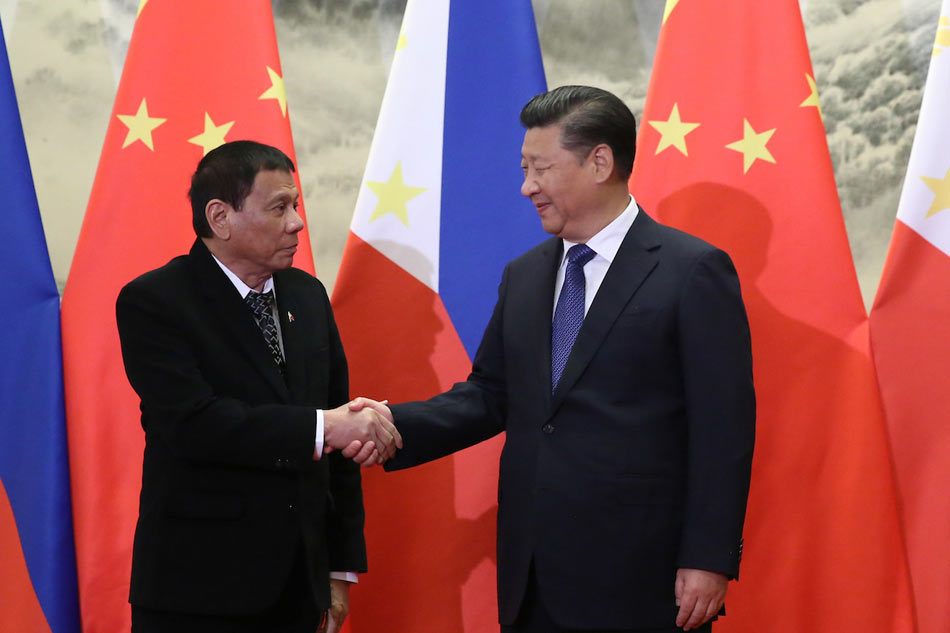
President Rodrigo Duterte and Chinese President Xi Jinping shake hands prior to their bilateral meetings at the Great Hall of the People in Beijing on October 20, 2016. King Rodriguez, MalacaƱang Photo/File

BEIJING, China - HBIS Group, China's second-biggest steelmaker, has signed a memorandum of understanding on a $4.4 billion project in the Philippines that will eventually produce 8 million tons of steel per year, according to Chinese state media reports and a statement from the Department of Trade and Industry.

The so-called Philippine Iron and Steel Project will be the Southeast Asian country's first integrated steel complex and represents the biggest industrial investment from China in the Philippines to date, a Dec. 14 statement from the Department of Trade and Industry said.

The two-phase project, to be located in the province of Misamis Oriental on Mindanao island, will produce 4.5 million tons of hot-rolled coil and 600,000 tons of slab annually in the $3 billion first phase, according to the statement. 

Output capacity will reach 8 million tons through a second phase, with the overall construction and ramp-up period slated to span three-five years.

"This project is very important to our industrial development and will allow us to pursue President (Rodrigo) Duterte's vision of having a globally competitive integrated iron and steel industry," Trade and Industry Secretary Ramon Lopez said in the statement, which said the project would also create over 20,000 job opportunities.

Jin Yuan, commercial counselor at the Chinese embassy in the Philippines, described the project as an "important follow-up" to cooperation between the two countries as part of Beijing's Belt and Road Initiative, according to the state-run China Metallurgical News.

HBIS, based in China's biggest steel province of Hebei, has been forced to look overseas for production growth as the Chinese government clamps down on new capacity in China for environmental reasons. 

Besides HBIS, private equity firm Huili Investment Fund, Philippine rebar producer Steel Asia Manufacturing Corp and the state-owned Phividec Industrial Authority were also signatories to the memorandum. 

The facilities in the complex will include sintering, coking, pelletizing and steel-rolling, according to the Philippine statement, producing basic iron and steel products for further processing.

Monday, December 17, 2018

Pinay wins best nanny in UAE

Filipina wins Best Nanny award in UAE


17 December 2018


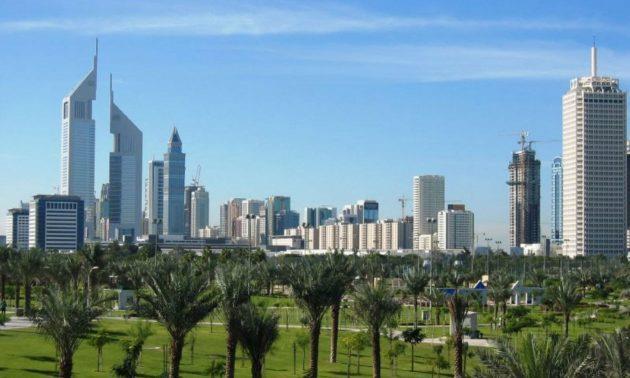
(MENAFN - Asia Times) A Filipino domestic worker in Dubai was named the United Arab Emirates' Best Nanny for 2018, beating out 42 others who were shortlisted for the award. 

img

Rosie Villa, 39, who has been working in the UAE for 17 years, was nominated for the award by her current employers of almost six years. On Friday, Villa won the award, the initiative of a financial-technology platform for migrants, which saw more than 2,000 nominations from families all across the UAE, Khaleej Times reported.
Villa will receive a retirement fund of 1 million Philippine pesos (US$18,860) as her prize, which will allow her to pay for her daughter's college education. She said the money came at the time she needed it the most. 

Villa started working after her husband left her and her one-year-old daughter, who is now 17. She decided to take a job in Dubai as she needed to finance her daughter's education, as well as support her parents and siblings.
'My parents are bedridden and it is my sisters who take care of them. They also play the role of mother for my daughter. I am grateful to them,' Villa said. 

Last year, Filipino domestic worker Melanie Manansala won the UAE's Best Nanny award. Manansala worked in Dubai for 25 years and said the prize money she got would help her retire sooner and return home to the Philippines for good.

Philippines is Miss Universe 2018

Catriona Gray crowned Miss Universe


Joel Guinto
ABS-CBN NEWS | 17 December 2018

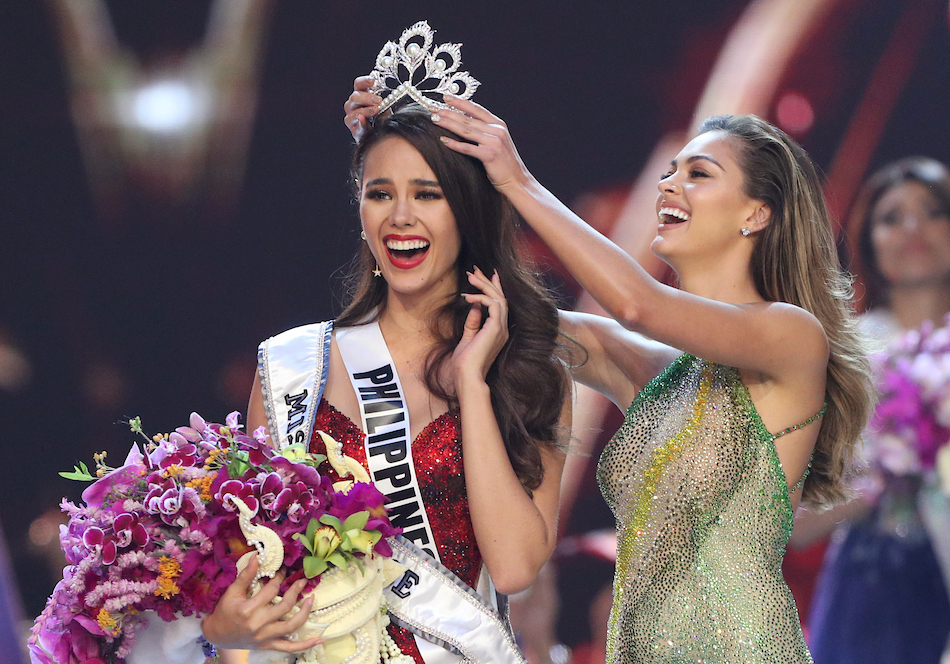
BANGKOK -- Catriona Gray was crowned Miss Universe here Monday, capping a two-year long journey from her heartbreaking loss at Miss World to her rise as visionary beauty queen and social media star.
Miss Philippines Catriona Gray is crowned Miss Universe during the final round of the Miss Universe pageant in Bangkok, Thailand, December 17, 2018. Athit Perawongmetha, Reuters
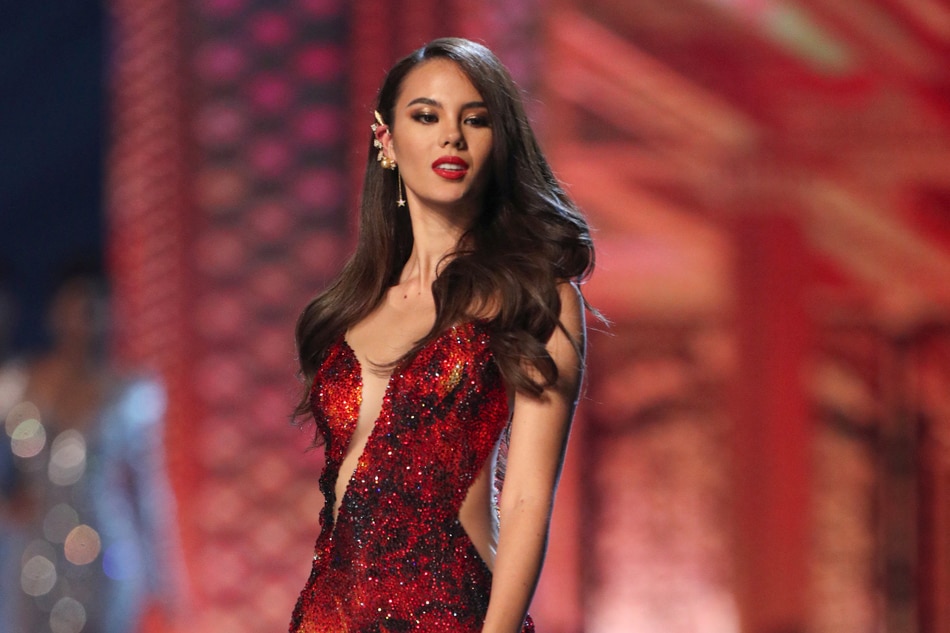
The 24-year-old Filipino-Australian won the Philippines' fourth Miss Universe crown, pulling all the stops from a giant lantern strapped to her back, a slow-motion twirl in a hot pink bikini, and a long gown in flame hues that symbolized a mythical Filipino bird.


Fans screamed at the IMPACT Arena here as outgoing Miss Universe Demi Leigh Nel Peters from South Africa crowned her successor.

Pia Wurtzbach last won the Miss Universe crown for the Philippines in 2015 and the succeeding edition was hosted in Manila.

Tamaryn Green of South Africa was first runner-up followed by Miss Venezuela Sthefany GutiƩrrez.

During the final question, Gray was asked "What is the most important lesson you've learned in your life and how would you apply it to your time as Miss Universe?"

She replied: "I work a lot in the slums of Tondo, Manila and the life there is... it's poor and very sad. And I've always taught myself to look for the beauty of it, to look for beauty in the faces of the children and to be grateful. And I would bring this aspect as a Miss Universe, to see situations with a silver lining, and to assess where I could give something, where I could provide something as a spokesperson. If I could teach also people to be grateful, we could have an amazing world where negativity could not grow and foster, and children would have a smile on their faces. Thank you."

FROM THE WORLD TO THE UNIVERSE

Only 2 years ago, Gray was widely tipped to win the Miss World crown, a campaign that ended in defeat to Puerto Rico's Stephanie del Valle.

A photo of Gray weeping, clutching the Philippine flag close to her chest, made the rounds on social media platforms.

Miss World Philippines head Cory Quirino stepped down after Gray's defeat and the Philippines struggled to make the winner's circle of the London-based pageant since then.

Gray reemerged in January for the Binibining Pilipinas screenings, trading the high bun for long curls and the baby pink dress for a short red dress.

In an Instagram post at that time, Gray said much of her transformation happened away from the public eye.

The self-described "stubborn" and "visionary" beauty enlisted the help of a new team and went outside her old mentors' circle, which was largely behind the Philippines' hot streak at Miss Universe since Venus Raj broke the 10-year semifinals drought and finished in the top 5 in 2010.

The Philippines has made at least Top 10 at Miss Universe since Raj's breakthrough performance in Las Vegas. This year, the country's Miss International bet, Ahtisa Manalo placed first runner while Celeste Cortesi finished top 8 in Miss Earth.

FOR THE PHILIPPINES

Gray has 1 million followers on Instagram and her photo on the Miss Universe Facebook page was liked or loved by over 600,000 users, the most for any candidate.

She made ear cuffs a conversation piece when she wore a gold and diamond "three stars and the sun" on her right ear during her Miss Universe-Philippines crowning.

From there, her every move was rife with nationalist symbolism.

Her national costume, while difficult to walk in, paid homage to the Philippines' 3 main islands. A government body praised Gray for highlighting Filipino civilization before the Spanish occupation with her 'pintados' body suit.

Her fire orange and yellow gown stood out from a sea of sheer and gold tones, symbolizing both the Ibong Adarna, which can cure with song, and the rising phoenix from which the Miss Universe crown by Japanese jeweler Mikimoto was patterned after.

PH investment Outlook 2019

The Philippines' Investment Outlook for 2019


By ASEAN Briefing | Philippine Information Agency
December 18, 2018


Despite the downside risk of recent inflation in the Philippines, the International Monetary Fund (IMF) projects a 6.6 percent economic growth outlook by 2019. On the other hand, the inflation forecast is estimated to reduce by 4 percent amid a 6.7 percent current inflation rate. The IMF cites a weaker peso, higher excise taxes and rising global oil prices as key inflation drivers.
The World Bank’s Economic Update on the Philippines presents a positive growth direction in terms of sustainability and inclusiveness, notwithstanding the Philippine government’s efforts to tackle domestic risks through careful fiscal management and timely implementation of tax reforms and public investment programs such as the “Build, Build, Build” scheme of the administration of President Rodrigo Duterte. Infrastructure spending is rising year-on-year with 44 out of 75 projects already implemented. Known for his strong political will and decisive leadership, Duterte wants urgent implementation of these projects especially in areas with potential for investing in business.   
Investment Climate
At the end of 2017, the Philippines registered the highest rate of foreign direct investment (FDI) progress in ASEAN.
FDI continued to grow by 42 percent in the first half of 2018 due to increasing investor confidence driven by the country’s sound macroeconomic fundamentals and growth prospects. The Philippine Statistics Authority (PSA) noted a total of approved foreign investments in the second quarter of the same year which amounted to P30.9 billion (US$575.9 million), much higher than the P18.2 billion (US$339.2 million) recorded in 2017. 
FDI inflows continue to surge in the Philippines despite the global FDI decrease which reflects a favorable investment climate. Foreign business leaders also welcome the government’s initiative to encourage corporate establishments in the country.
On October 29, 2018, Duterte signed the Executive Order No. 65 promulgating the 11th Regular Foreign Investment Negative List (FINL). The said order was amended to include five areas for 100 percent foreign investment participation.
The National Economic and Development Authority (NEDA) listed the following investment areas/activities where 100 percent FDI will now be permitted:
  • Internet businesses, as excluded from mass media;
  • Teaching at higher education levels provided the subject being taught is not a professional subject (i.e., included in a government board or bar examination);
  • Training centers that are engaged in short-term high-level skills development that do not form part of the formal education system;
    Adjustment companies, lending companies, financing companies and investment houses; and
  • Wellness centers excluded in Item 4 of List B of the FINL.
Opening up to foreign investors and limiting constraints in doing business has become a priority of the Duterte government. Duterte frequently underpinned the importance of amending the 1987 constitution to lift foreign investment restriction in order to cut red tape and further liberalize business practices.
The shift to Federalism also offers a significant outlook for the country’s competitiveness in generating more employment opportunities.
Economy
Information Technology – Internet Service
The Philippines has recently addressed a major industrial policy concern by bringing in a third TELCO player in order to end a duopolistic situation in its telecommunication industry, and allow new players to enter.
The National Telecommunications Commission confirmed Mislatel as the third major telecom player. The consortium is made up of China Telecom, a Chinese state-owned telecommunication company and Udenna Corp and Chelsea Logistics owned by Davao-based tycoon Dennis Uy. 
A third internet provider has long been sought for in the country due to its worsening internet reputation in Asia. Under Duterte, the Philippines has raised the bar for foreign participation. Duterte’s stance is that foreign investment in this area is needed in order to improve the country’s telecom and power sectors, and in turn, boost the economy. With the constitutional amendment on its way, more foreign investors can compete for the service.
While Industry topped the major economic growth sector last year, the Services sector indicated the fastest growth this year at 6.9 percent followed by Industry sector with a growth of 6.2 percent. The country’s current GDP growth stands at 6.1 percent as of November 2018.
Banking & Credit
Based on Moody’s investor service report on the Philippines banking system, the Philippines maintains a Baa2 rating credit outlook with very positive features. Moody predicts that a stable credit growth will continue for the next 12-18 months, noting that cost-effectiveness is improving.
On the other hand, the back-to-back hikes in interest rates are seen in a positive light amid the inflationary pressures and impact of tax reforms (TRAIN Law). The Banko Sentral ng Pilipinas (BSP), the country’s central bank, extended the borrowing rate by 150 basis points to cope up with the inflation and this is expected to elevate until next year.
Meanwhile, the Philippines also noted a substantial decline in the country’s external debt in recent years.
As of June 2018, foreign debt went down by 1.4 percent from the previous year, amounting to US$997 million. BSP attributed this to the de-leveraging of private sector foreign borrowings that minimizes foreign exchange (FX) risk.
Outlook for 2019

Declining poverty and an estimated labor rate of 94.6 percent contribute to the Philippines’ sustainable growth trajectory.
The rising population which is estimated to reach 106.6 million makes the country attractive for foreign investment due to its young, well-educated and dynamic workers.   
The completion of infrastructure development that hinges on public expenditures would strengthen business and consumer spending. However, external factors would continue to pose uncertain risks in the global financial markets.
The World Bank 2018 report projects that average inflation would fall at 3 percent by 2019 – within the BSP ‘s 2-4 percent target range. It also expects the Service sector to become the main driver of economic growth. (Zhorea Shara Garcia/ASEAN Briefing)
Sunday, December 16, 2018

The WESGO SEA Champion

Filipino team wins 2018 WESG SEA CS:GO All-Female Finals


Fox Sports Asia | 16 December 2018


Filipino team ArkAngel Female defeated the Singaporean squad Phoenix to emerge victorious in the 2018 World Electronic Sports Games (WESG) Southeast Asian (SEA) Counter-Strike: Global Offensive (CS:GO) Finals to qualify for the 2018 WESG Global Finals.

ArkAngel had a rough start in the Grand Finals as they fell to Phoenix, 16-4, in the first map, Cache. The team was able to bounce back to take the second map, Mirage, 16-13. In the deciding third map, ArkAngel didn’t let their opponents take back the momentum by ultimately taking the series with a 16-8 victory in Inferno.

ArkAngel took home the lion’s share of the prize at $7,500 as well as a spot in the Global Finals, where they will compete against 8 other all-female teams from around the world for a prize pool of $105 thousand.

The SEA Finals was held in the Quill City Mall in Kuala Lumpur, Malaysia. The 2018 Global Finals, which has long been the world’s only Olympic-style Esports competition, will be held on March next year in China.
ArkAngel CS:GO Female:
Tr1cks
Laire
Kuchiii
c0ffeeee
Joy


TNC Predator wins 2018 WESG SEA Dota 2 Finals

Fox Sports Asia | 16 December 2018


Filipino team TNC Predator came out on top in the 2018 World Electronic Sports Games (WESG) Southeast Asian (SEA) Dota 2 Finals after defeating the Malaysian squad WarriorsGaming.Unity.
TNC were dominant throughout the tournament and that show of force continued in the finals, where they quickly swept the best-of-three series.
TNC will take home $7,500 as well as one of the spots for SEA in the 2018 WESG Global Finals, which features an $890 thousand prize pool. This will signal the Filipino team’s return to the global tournament after they won the 2016 WESG Global Finals.
TNC competed in the SEA Finals with Ryo “ryOyr” Hasegawa standing in for offlaner Carlo “Kuku” Palad, who has taken a personal leave from the team. Kuku’s leave came after he was banned by Valve from participating in the Chongqing Major.
TNC will not be the only team representing SEA in the Global Finals, as the top 4 teams in the SEA Finals will also book a spot in the tournament.
The Filipino squad will be joined by the Malaysian runners-up, WarriorsGaming.Unity, as well as Myanmar team Veteran and BOOM ID from Indonesia. There will be a total of 24 teams from all over the world competing in the Global Finals.
The SEA Finals was held in the Quill City Mall in Kuala Lumpur, Malaysia. The 2018 Global Finals, which has long been the world’s only Olympic-style Esports competition, will be held in March 2019 in China.

TNC Predator:
Kim “Gabbi” Villafuerte
Armel “Armel” Tabios
Ryo “ryOyr” Hasegawa (stand-in)
Timothy “Tims” Randrup
Michael “ninjaboogie” Ross Jr.


Pinoy farmer finalist in International Cocoa Awards

Filipino farmer makes it to the finals of 2019 International Cocoa Awards Antonio Colina Manila Bulletin 18 August 2019 DAVAO CITY ...